



You need an indoor playground business plan that covers safety, finances, and customer experience. When I started planning, I saw that missing important details can cause big problems. Here is what I found most indoor playgrounds have trouble with:
- If you only have one way to make money, it is hard to get through hard times.
- If you skip regular maintenance or safety checks, accidents can happen and your reputation can get worse. 🛡️
With the right plan, you can stop these mistakes and make a playground that families trust.
Indoor Playground Business Plan Basics
Why a Business Plan Matters
A business plan is your roadmap for building a professional indoor playground that lasts.
When I started my own indoor playground business, I saw that having a plan helped me not make mistakes. It also helped me set goals I could reach. Here’s why I think every owner needs one:
- 🎯 Defines key objectives and strategies: My business plan helps me pick the best place, equipment, and ways to tell people about my playground.
- 💰 Attracts investors: Investors want to know I understand the market and have a plan to grow.
- 🛡️ Manages risks: My plan helps me find safety problems and get ready for changes in the market.
- 🔄 Keeps me flexible: I change my plan when new trends come up, so my professional indoor playground stays popular.
Tip: I always keep my business plan close. It helps me remember my goals and make good choices.
Key Elements to Include
Every indoor playground business plan should cover these essentials.
I learned that leaving out even one part can cause trouble later. Here’s what I always put in:
| Section | What It Covers | Why It Matters 😃 |
|---|---|---|
| Mission Statement | My purpose and vision for the playground | Sets direction |
| Market Analysis | Local demand, competition, and trends | Finds opportunities |
| Target Audience | Who will visit my professional indoor playground | Shapes services |
| Location & Facility | Where I’ll open and how I’ll design the space | Impacts success |
| Playground Design | Equipment, safety, and theming | Attracts families |
| Legal & Compliance | Permits, insurance, and safety rules | Avoids trouble |
| Staffing & Operations | Hiring, training, and daily routines | Runs smoothly |
| Marketing Plan | Branding and promotion strategies | Grows business |
| Financials | Costs, revenue, and break-even point | Tracks progress |
Note: I use a business plan template to help me organize these parts. The template gives me a simple outline, shows me what to do next, and has examples that make planning easier. It helps me focus on the most important things for my professional indoor playground.
Mission Statement
A strong mission statement inspires my team and attracts families.
When I wrote my mission statement, I thought about what makes my indoor playground business different. I wanted it to show my values and what I want to achieve.
- I keep it short and easy to understand.
- I talk about safety, fun, and community.
- I make sure it fits my brand and vision.
Here’s an example I used for my professional indoor playground:
“To create a safe, exciting, and welcoming space where children and families can play, learn, and connect.”
I put my mission statement at the top of my indoor playground business plan. It reminds me why I started and helps me stay focused.
Indoor Playground Industry Statistics
The indoor playground industry is growing fast and shows no signs of slowing down. I see more families looking for safe and fun places to play indoors. This makes the market stronger every year.
Here’s a quick look at the global market value:
| Year | Market Value (USD) | CAGR (%) |
|---|---|---|
| 2024 | 6.5 billion | N/A |
| 2025 | 6.89 billion | N/A |
| 2033 | 10.6 billion | 6% |
🏆 What does this mean for me?
The indoor playground industry keeps getting bigger. I see more opportunities to open new playgrounds and offer better services.
Why is the industry growing?
- More parents want indoor entertainment for their kids.
- Safety matters more than ever.
- New play equipment makes playgrounds exciting.
- Cities and towns support family-friendly businesses.
- Young families want places to play, learn, and connect.
I notice these trends every day in my own business. Families ask about safety features and new activities. Kids love trying new equipment. Local governments often help with grants or advice.
The future looks bright for indoor playgrounds.
I read that demand will rise, especially in big cities. Government programs and a new generation of parents help the market grow. I see more playgrounds adding art, culture, and learning to their spaces. This makes each playground unique and keeps families coming back.
💡 Tip:
I always check the latest trends and statistics before making big decisions. This helps me stay ahead and offer what families want.
In summary:
The indoor playground industry is strong and growing. If I plan well and follow the trends, my playground can succeed for years.
What Makes an Indoor Playground Business Plan Necessary?
A business plan is not just paperwork—it is the foundation for a professional indoor playground. When I started my own indoor playground business, I realized that having a clear plan made everything easier. Let me show you why it matters so much.
1. It keeps me compliant with the law.
I cannot open a professional indoor playground without meeting legal requirements. Here is a table that shows what I need:
| Requirement — | Description — |
|---|---|
| Business license — | I need this to run any indoor playground business. — |
| Zoning permit — | My location must be zoned for a professional indoor playground. — |
| Building permit — | I need this if I change the building or add new play equipment. — |
| Health and safety permits — | These cover sanitation and food handling if I serve snacks. — |
| Fire safety permit — | My playground must meet fire codes and safety standards. — |
| Occupancy permit — | This confirms my space is safe for families and kids. — |
🛡️ Tip: I always check with my local government before I sign a lease or buy equipment. Missing a permit can shut down my playground before it opens.
2. It helps me get funding and support.
Banks and investors want to see a professional indoor playground business plan before they give me money. Here is what they look for:
| Evidence Description — | Key Points — |
|---|---|
| Business Plan Overview — | Shows how my playground will grow and succeed. — |
| Funding Assistance — | Helps me raise money and plan for future growth. — |
| Loan Requirements — | Proves I can pay back loans and run my playground well. — |
💰 Note: When I applied for a loan, the bank asked for my business plan. They wanted to see my goals, my budget, and my plan for making money.
3. It keeps my playground safe and organized.
A professional indoor playground needs rules for safety, cleaning, and daily routines. My business plan helps me set these rules and train my team.
4. It helps me avoid costly mistakes.
I use my plan to spot risks before they become problems. If I forget to check equipment or skip safety training, accidents can happen. My plan keeps me on track.
5. It shows families I care about quality.
Parents trust a professional indoor playground that follows rules and has a clear plan. My business plan helps me build that trust.
In summary:
A strong indoor playground business plan is necessary for legal compliance, funding, safety, and trust. I use my plan every day to run a professional indoor playground that families love. 🏆
Is an Indoor Playground Profitable?
Yes, a professional indoor playground can make money if you plan well and focus on what is important. I have seen many owners do well by using a strong indoor playground business plan and paying close attention to details.
When I first learned about the indoor playground business, I wanted to know what helps indoor playground profits grow. I found out that some things matter more than others:
- 🚶♂️ Customer traffic: More families visiting means more money.
- 📍 Location: Being close to schools or busy places brings more people.
- 🏗️ Size and facilities: A bigger professional indoor playground with lots of things to do can have more guests.
- 💸 Operational costs: I watch rent, staff pay, and bills so I do not spend too much.
- 🎡 Diversity of attractions: I add new play areas and fun things so families want to come back.
- 🛡️ Safety: Parents trust a professional indoor playground that keeps kids safe.
- 📢 Marketing and branding: I use social media and ads to let new families know about my playground.
Tip: I always look at what other playgrounds do. If I see something cool or different, I think about adding it to my own professional indoor playground.
Here is a table that shows how these things change profit:
| Factor | Impact on Profit 😃 |
|---|---|
| Customer traffic | More visitors, more sales |
| Location | Easy access, higher traffic |
| Size and facilities | More space, more activities |
| Operational costs | Lower costs, higher profit |
| Diversity of attractions | Keeps families interested |
| Safety | Builds trust, repeat visits |
| Marketing and branding | Attracts new customers |
I also learned that having new things and lots of choices is important. When I get new play equipment or have special events, families get excited and tell their friends. This helps my professional indoor playground be different from others.
Here are the steps I use to make more profit:
- I pick a good spot where many families live.
- I design my professional indoor playground for kids of all ages.
- I keep everything clean and safe.
- I offer birthday parties, classes, and memberships to earn extra money.
- I check my spending and change prices if I need to.
🏆 Note: A professional indoor playground with a clear indoor playground business plan can get through hard times and grow faster.
From what I have seen, a professional indoor playground makes money when I focus on what families need, keep things safe, and spend money wisely. I always try to get better and listen to what families want. If you do these things, your indoor playground business can do well and make steady money.
What general themes do indoor playgrounds have?
Indoor playgrounds use creative themes to make playtime fun and special. I know that picking the right theme can change a plain room into a cool place for kids and families. When I plan my playground, I think about what will make kids imagine new things and want to visit again.
Here are the most popular themes for indoor playgrounds in 2024:
| Theme | Description |
|---|---|
| 🌳 Nature-Inspired Themes | Spaces look like forests or oceans. Kids act like explorers or sea captains. |
| 💧 Interactive Water Features | Safe water play areas. Children splash, pour, and cool off while learning about water. |
| 🌱 Biophilic Design Elements | Real plants and green spots. These help people feel calm and breathe better. |
| 👂 Sensory Zones | Places with different textures, sounds, and smells. These help kids grow their senses. |
| 🏗️ Flexible Play Structures | Equipment that moves or changes shape. Kids use these for lots of games and activities. |
Tip: I like to use two or three themes in my playground. This makes every visit feel new and fun for families.
Themed playgrounds do more than just look nice. They help my business get better.
- Themed playgrounds build a strong community. Families feel welcome when they see a fun space.
- Memberships and repeat visits go up. When families enjoy the theme, they want to come back many times.
- Happy families tell their friends. Good times make people talk about my playground, which brings new customers.
I see that kids love to explore new places. When I add a jungle or ocean theme, children pretend they are on adventures. Parents like watching their kids learn and play in a safe spot. I also notice that sensory zones help kids with different needs feel included.
Why do I focus on themes?
Themes make my playground different. They give families a reason to pick my place instead of others. I can change or update themes for holidays or seasons. This keeps my playground fresh and fun.
😊 Note: I always ask families what themes they want next. Their ideas help me plan new areas and activities.
In summary:
The right theme makes an indoor playground a special place. Nature, water, sensory play, and flexible equipment are top picks in 2024. Themed playgrounds help me build a loyal community and keep families coming back for more fun.
Market Study and Industry Overview
Indoor Playground Industry Trends
The top three trends in the indoor playground industry for 2025 are interactive themed play spaces, smart technology integration, and modular design.
I notice these trends change how I set up my playground. Parents want more than just slides or ball pits. They look for places where kids can learn, make friends, and have fun in new ways.
- Interactive Themed Play Spaces: I make play areas with stories and adventures. Kids pretend to be explorers or superheroes. This helps them use their imagination and learn social skills.
- Interactive Play Equipment & Smart Technology Integration: I add tech features like touch screens and light games. Kids enjoy mixing physical play with digital fun.
- Modular and Space-Savvy Design: My playground uses equipment that moves or stacks. I change the layout for parties or special events. This lets me use all the space, even in small buildings. 🏗️
💡 Tip: I ask families what new features they want. Their ideas help me stay ahead in the indoor playground market.
Local Market Analysis
Studying my local indoor playground market helps me find the best location and services for families.
I start by checking how many families live close by. I see if there are schools, daycares, or busy shopping centers near my playground. I ask parents what they want most, like safe play, birthday parties, or learning activities.
Here’s a simple table I use to compare local needs:
| Factor — | What I Look For — | Why It Matters — |
|---|---|---|
| Family Population — | Number of families with young kids — | More families mean more visitors — |
| Competing Playgrounds — | How many playgrounds are nearby — | Shows if the market is crowded — |
| Community Events — | Local festivals or fairs — | Good chances to promote my playground — |
| Parent Preferences — | What parents ask for — | Helps me offer the right services — |
I talk to families at local events and use surveys to learn what they want. This helps me design a playground that fits my community.
Competitor Research
Knowing my competitors helps me make my playground stand out.
I visit other playgrounds in my area. I look at their prices, themes, and special offers. I check their reviews online to see what families like and dislike.
Here’s how I compare my playground to others:
- I list what makes my playground unique, like special themes or tech features.
- I note what competitors do well and where they fall short.
- I watch for new playgrounds opening nearby.
🏆 Note: I use this research to improve my playground and offer something families cannot find anywhere else in the indoor playground industry.
In summary:
Researching the indoor playground industry and my local indoor playground market helps me plan better. I follow new trends, study my community, and learn from competitors. This keeps my playground fresh, fun, and successful.
Target Market and Unique Value
Identifying Your Audience
I always start by knowing exactly who will visit my indoor playground. 🎯
I find families who want safe fun for their kids. Most visitors are parents with kids ages 2 to 10. Grandparents, babysitters, and school groups come too. I talk to families at events and ask what they want.
Here’s how I sort my audience:
- Parents who care about safety and clean places
- Families who want fun without screens
- Kids who like to play and learn
- Caregivers who need a good place for kids
- Schools and groups planning trips
I use surveys and social media to learn what people like. This helps me plan new things and keep everyone happy.
Unique Selling Points
I set my playground apart by offering things families can’t find anywhere else. 🏆
To stand out, I focus on what makes my playground special. Here’s a table with my top unique selling points:
| Unique Selling Points | Description |
|---|---|
| Themed zones and attractions | I make play areas with cool themes like jungles or space. |
| Exceptional services | I offer birthday parties, VIP memberships, and learning programs. |
| Interactive elements | I add smart wristbands and games for extra fun. |
| Storytelling | I create stories for my playground’s theme so families feel part of an adventure. |
These features help bring in new customers and keep them coming back. When families see new things, they want to return. I update my themes and add new services to build customer loyalty.
Customer Service Strategies
Great customer service keeps families coming back and helps build customer loyalty. 😊
I use easy ways to make every visit special:
- I group my audience by age and interests. This helps me talk to them better.
- I share photos and news on Facebook, Instagram, and TikTok.
- I send email newsletters with deals and news about new activities.
Here are more ways I make my playground stand out:
- I design open spaces so families feel comfortable.
- I offer birthday parties and workshops for more fun.
- I work with local businesses to reach more people.
I listen to feedback and thank families for their ideas. This helps me get better and build customer loyalty.
Screen-free entertainment is my main promise. I want kids to play and use their imagination. When I use these strategies, I see more happy families and a stronger business.
Location and Facility
Finding the Right Location
The right location can make or break your indoor playground. 🗺️
I learned that picking a good spot is very important. I always look at a few things before I choose.
- Visibility: I want families to see my playground from the street. This helps more people notice it.
- Accessibility: I pick places that are easy to get to. Parking and buses are important for families.
- Target Market Demographics: I look for areas with lots of families and young kids.
- Space Requirements: I check if the building has enough room for everyone to play.
- Zoning Regulations: I read local rules to make sure I can open my business.
- Safety: I choose a safe neighborhood where parents feel good.
- Competition Analysis: I visit other playgrounds to see what they do.
Tip: I think about rent and how many families will come. A busy place costs more, but brings in more customers.
Space and Layout Needs
Enough space keeps kids safe and happy. 🏠
I always make sure there is plenty of room. I follow some simple rules.
- Each child gets at least 35 square feet inside. This keeps play safe for everyone.
- I make open spaces for running and climbing.
- I add quiet corners for reading or resting.
- I leave spots for parents to sit and watch.
Here’s a checklist I use:
- I count how many kids might come at busy times.
- I multiply that number by 35 square feet to find the space I need.
- I add more room for parties, strollers, and staff.
I learned that a good layout makes families stay longer. I keep walkways wide and do not let things get crowded.
Accessibility
A great playground welcomes everyone. ♿
I want all kids and families to feel included. I add things that help everyone enjoy the playground. Here is a table of what I use:
| Feature | Description |
|---|---|
| Sensory Opportunities | Activities for hearing, seeing, touching, tasting, and smelling. |
| Rest Areas | Cozy chairs for kids and adults to relax. |
| Temperature Control | Good air and heat for comfort in every season. |
| Ramps | Easy ways for everyone to get to all play areas. |
| Soft Structures | Safe equipment for all ages and abilities. |
| Seating | Soft seats close to play zones for parents and kids. |
| Quiet Areas | Calm spaces for kids who need a break. |
| Variety of Equipment | Choices for different skill levels and interests. |
| Social Opportunities | Spaces for group play and solo play. |
I always check if the playground’s location lets me add these features. This helps every family feel safe and welcome.
Playground Design and Equipment
Safety and Fun
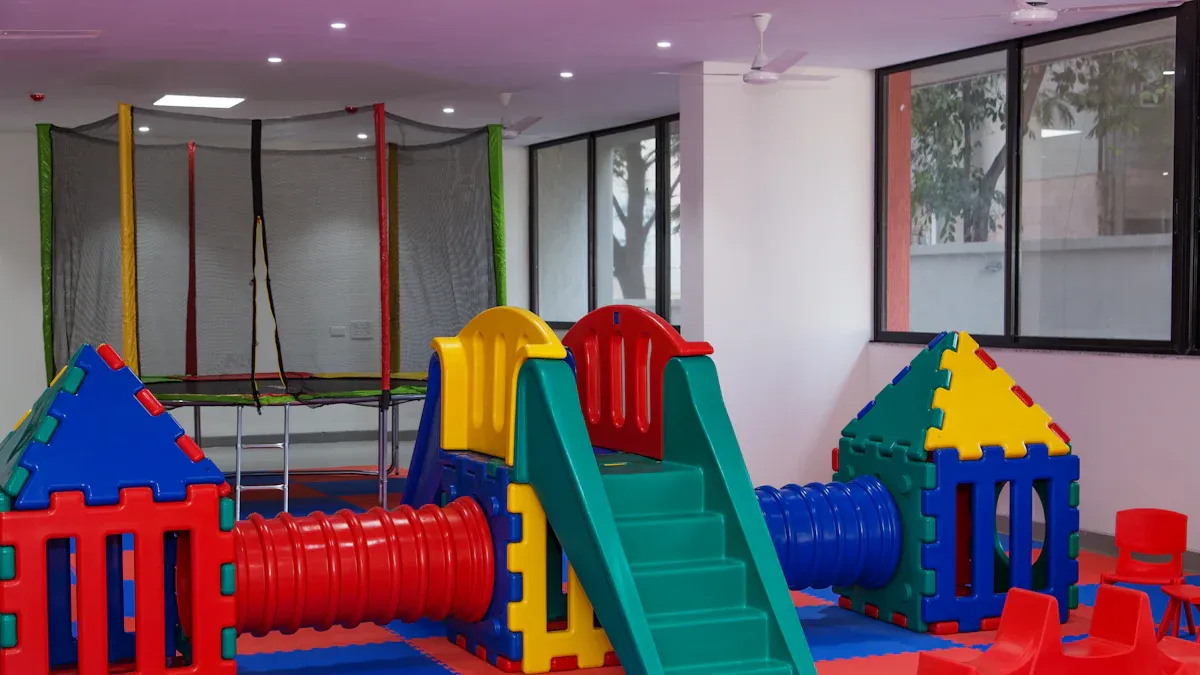
Safety always comes first in my indoor playground. I want kids to have fun, but safety is most important. I follow rules and check my equipment often. Here is what helps me keep things safe:
The CPSC makes safety rules for playgrounds. These rules help keep children safe in public places.
The American Society for Testing and Materials (ASTM) has rules for indoor playground equipment. ASTM F1918-22 tells how to make soft play equipment safe. It covers strong materials, good structure, soft padding, and safe spaces.
The U.S. Consumer Product Safety Commission (CPSC) wrote a handbook for playground safety. It lists important safety steps for playgrounds in schools and public places.
Indoor Playgrounds International makes sure their products follow safety and quality rules. They want all playground users to be safe.
I check that my indoor playground equipment follows these rules. I look for strong parts, soft landings, and safe spaces between play areas. I teach my staff to find problems and fix them quickly. When I focus on safety and quality, parents trust my playground. Kids can have fun every time they visit. 😊
Age-Appropriate Equipment
I pick equipment that fits each child’s age and skills. This keeps everyone safe and happy. I make different zones for toddlers, preschoolers, and older kids. Here is how I do it:
- Playgrounds need special areas for toddlers, preschoolers, and older kids. This makes sure the equipment is right for each age.
- For example, toddlers use small play sets with low heights. Older kids can try harder activities.
- This design helps lower the risk for all ages.
I use bright signs and simple rules in each area. Parents know where their kids should play. I also add new indoor playground attractions to keep things fun for every age group.
Theming and Branding
A strong theme helps my playground stand out. I choose colors, characters, and stories that spark imagination. Kids like to explore new worlds. Parents remember a fun and special place. Here is how I build my brand:
| Theming Element | What I Do | Why It Matters 😃 |
|---|---|---|
| Colors & Murals | Paint walls with bright, friendly scenes | Makes the space inviting |
| Mascots & Characters | Create fun mascots for events and photos | Builds brand recognition |
| Storytelling | Add stories to play zones | Inspires creative play |
| Seasonal Updates | Change decorations for holidays | Keeps families coming back |
I ask families what themes they want next. Their ideas help me make a playground everyone enjoys. When I mix safety, age zones, and creative themes, my indoor playground becomes a place where kids and parents want to come back again and again. 🎉
Supplier Selection
How do I choose the right supplier for my playground?
I always start by looking for suppliers who care about safety, quality, and service. Picking the right partner makes my indoor playground business stronger and safer.
What do I look for in a supplier?
I use this checklist every time:
- ✅ Safety certifications: I check if the supplier follows ASTM and CPSC standards.
- 🏆 Experience: I pick companies with a good track record in indoor playground equipment.
- 🛠️ Customization: I want options for colors, themes, and sizes.
- 🚚 Delivery and installation: I ask if they handle shipping and setup.
- 💬 Customer support: I need fast help if something breaks or I have questions.
- 💵 Warranty and after-sales service: I look for strong warranties and easy repairs.
Why does supplier location matter?
I prefer local or regional suppliers when possible. This helps me get faster service and lower shipping costs. If I order from far away, I check reviews and ask for references.
How do I compare suppliers?
I use a simple table to keep things clear:
| Supplier Name — | Safety Certified — | Custom Options — | Delivery/Install — | Warranty — | Price — |
|---|---|---|---|---|---|
| Supplier A — | Yes — | Yes — | Yes — | 2 years — | $$$ — |
| Supplier B — | Yes — | No — | Yes — | 1 year — | $$ — |
| Supplier C — | No — | Yes — | No — | 1 year — | $ — |
Tip: I always ask for a sample or visit a playground that uses their equipment. This helps me see the quality up close.
What questions do I ask before I buy?
I never skip these questions:
- Can you show proof of safety testing?
- How long does delivery take?
- Who installs the equipment?
- What happens if something breaks?
- Do you offer training for my staff?
How do I avoid problems with suppliers?
I read contracts carefully. I check for hidden fees or unclear terms. I keep all emails and paperwork. If I feel unsure, I ask other playground owners for advice.
📝 Note: The right supplier helps my playground stay safe, fun, and open for business. I take my time and never rush this step.
In summary:
Choosing the best supplier for indoor playground equipment keeps my business safe and exciting. I look for safety, service, and value every time. When I pick the right partner, families trust my playground and keep coming back. 😊
Legal and Compliance
Permits and Licenses
You need several permits and licenses before you open your indoor playground. 📝
I always check the rules in my city and state. Every place has its own list of what you need. Here is what I look for:
- Business license: This lets me run my playground the right way.
- Zoning permit: I make sure my spot allows indoor playground equipment and activities.
- Building permit: I get this if I change the building or add new play areas.
- Health and safety permits: These cover food service and keeping things clean.
- Fire safety permit: My playground must follow fire codes and safety rules.
- Occupancy permit: This shows my space is safe for families.
Tip: I call my city office before I sign a lease. If I miss a permit, my opening can be delayed.
Insurance
Insurance protects my business from accidents and surprises. 🛡️
I always get insurance. It helps if something bad happens. Here is a table that shows the types I use:
| Insurance Type — | Description — |
|---|---|
| General Liability Insurance — | Covers claims if someone gets hurt or something is damaged. — |
| Property Insurance — | Protects my building, indoor playground equipment, and furniture. — |
| Workers’ Compensation Insurance — | Helps workers if they get hurt or sick at work. — |
| Professional Liability Insurance — | Covers mistakes or problems with services I give. — |
| Commercial Auto Insurance — | Needed if I use cars or trucks for my business. — |
I talk to an insurance agent who knows about playgrounds. The right insurance helps me follow safety rules and keeps my business open.
Health and Safety
Health and safety rules keep families safe and build trust. 👨👩👧👦
I follow strict safety rules for my playground. I check my indoor playground equipment often and teach my staff to look for problems. In Europe, BS EN 1176 sets rules for design, setup, and care. These rules help me keep everything safe.
Here is a table with key requirements:
| Requirement — | Description — |
|---|---|
| Compliance with safety requirements — | Every piece of equipment must meet safety rules. — |
| Warning notices — | I put up signs about risks near play areas. — |
| Operator information — | I show my name and contact info for families. — |
| Age range — | Each play area shows the right age for use. — |
| Regular maintenance — | I follow a plan to check and fix equipment. — |
| Inspection documentation — | I keep records of all safety checks. — |
I also follow these important rules:
- EN 1176-1 covers general safety and testing.
- EN 1176-2 to EN 1176-11 set rules for different play equipment.
- BS EN 1177 explains how to test playground floors for falls.
I always update my safety plan and train my team. Families trust me when they see I care about safety.
In summary:
Getting the right permits, insurance, and following safety rules helps me run a safe and successful playground. I check the rules often and keep my playground ready for families.
Staffing and Operations
Hiring Staff
I always look for friendly, responsible people when hiring for my indoor playground. 😊
My team needs to enjoy working with kids. They must care about safety. I look for people who are positive and patient. Good communication is important. I want staff with experience with children. Babysitting or teaching helps. Volunteering is good too. Staff should stay calm when things get busy. I use easy interviews. I ask about past jobs and solving problems. I ask what they would do if a child needed help. I check references to make sure they are honest.
Tip: I hire people who work well with others. I want staff who like learning new things. This makes my playground run well every day.
Training and Procedures
Training is the key to a safe and happy playground. 🛡️
Every new staff member gets full training before starting. I teach safety rules and emergency steps. First aid is part of training. I show how to greet families and solve problems. Staff learn to make everyone feel welcome. I explain how to handle money and keep things clean. I teach how to watch equipment. Staff learn to supervise kids by age. I give regular training updates. I share new industry news.
I add special training for my team. Staff learn tourist service skills. They talk with visitors and solve problems quickly. I teach how to use and care for play equipment. Teamwork is important. I show how to work together and fix conflicts. I help staff set goals for their jobs. I want everyone to keep learning new things. I ask for feedback and use it to improve.
Note: Everyone learns emergency steps like evacuation and fire drills. All staff must have first aid and CPR training.
Operational Procedures
Clear procedures keep my playground safe and organized. 📝
I use a checklist for daily tasks. This helps my team remember what to do. It shows when to do each job.
| Task | How Often | Who Does It |
|---|---|---|
| Safety checks | Every morning | All staff |
| Cleaning | All day | Rotating staff |
| Equipment checks | Twice a day | Supervisor |
| Cash handling | End of shift | Manager |
| Customer feedback | Ongoing | All staff |
I post rules for staff and families in easy-to-see places. I hold short meetings to talk about what went well. We discuss what can get better. I listen to my team’s ideas. I make changes when needed.
Tip: I keep all procedures simple and easy. This helps new staff learn quickly. It keeps my playground running well.
Marketing Your Indoor Playground Business
Building Your Brand
A strong brand makes families remember my playground. I focus on creating a story that feels fun and safe for both kids and parents. I use bright colors, friendly mascots, and a catchy name. My logo appears everywhere—on signs, staff shirts, and social media. I want parents to trust me and kids to get excited when they see my brand.
🏆 Tip: I always share my playground’s story online. I talk about why I started and what makes my place special. This helps families feel connected.
Marketing Techniques
Cost-effective marketing brings more families to my playground. I use simple tools that work well and do not cost much. Here are my favorite ways to reach new customers:
- 📱 Social Media Engagement: I post photos and videos of happy kids playing. I run contests on Facebook and Instagram to get families involved.
- ✉️ Email Marketing: I collect emails from visitors. I send out newsletters with special deals and news about new activities.
- 🌐 SEO: I make sure my website shows up when people search for indoor playgrounds in my city. I use keywords like “indoor playground near me” and “kids birthday parties.”
- 🎉 Themed Events: I host special days, like superhero parties or holiday celebrations. Families love to share these moments online.
- 🤝 Community Partnerships: I team up with local schools and businesses. We plan events together and help each other grow.
- 🗣️ Referral Programs: I reward families who bring their friends. Word-of-mouth is powerful and brings in new visitors.
Here’s a quick table of my top marketing tools:
| Tool | Why I Use It 😃 |
|---|---|
| Social Media | Builds a fun, active community |
| Email Newsletters | Keeps families updated |
| SEO | Attracts new visitors online |
| Events & Parties | Creates buzz and excitement |
| Partnerships | Expands my reach in the community |
| Referral Rewards | Encourages word-of-mouth |
😊 Note: I always ask families how they heard about us. This helps me see which marketing ideas work best.
Pre-Launch and Grand Opening
A great opening gets my playground off to a strong start. Before I open, I build excitement in my community. I share sneak peeks on social media and invite local families to see the space. I send out emails with special offers for the first week.
Here’s my simple pre-launch checklist:
- Post behind-the-scenes photos and videos online.
- Partner with local businesses for giveaways.
- Offer early-bird discounts to families who sign up before opening day.
- Invite local news and bloggers to visit.
- Plan a fun grand opening event with games, music, and prizes.
🎈 Tip: I make the grand opening a big celebration. I want every family to leave with a smile and tell their friends about my playground.
In summary:
Building a strong brand, using smart marketing, and planning a fun grand opening help my indoor playground business grow. I focus on what families love and keep my marketing simple, friendly, and fun. 🚀
Startup Budget and Financials
Startup Costs
How much does it cost to start an indoor playground?
Starting an indoor playground takes a big investment. I learned that costs can change a lot based on location, size, and what I want to offer. In a major city, I saw that the total startup costs usually fall between $350,000 and over $1 million. That number surprised me at first! Here’s a table that helped me break down the main costs:
| Cost Component | Estimated Range |
|---|---|
| Rent or Lease | $269,100 per year |
| Equipment and Installation | $150,000 to $500,000 or more |
| Safety Surfacing | $30,000 to $100,000 or more |
| Labor Costs | $100,000 to $200,000 or more |
| Insurance and Legal Fees | $10,000 to $30,000 or more |
| Marketing and Advertising | $10,000 to $50,000 or more |
| Total Estimated Costs | $350,000 to over $1 million |
🏗️ Tip: I always plan for extra costs. Surprises happen, like repairs or new rules from the city.
What are the biggest expenses?
Rent or lease is usually the largest cost. Equipment and installation come next. I also spend a lot on safety surfacing and labor. Insurance, legal fees, and marketing add up fast. I make sure to include every detail in my budget.
How do I keep costs under control?
I compare prices from different suppliers. I look for used equipment in good shape. I ask other owners about hidden costs. I also set aside money for emergencies.
Why is knowing startup costs important?
If I know my costs, I can set the right prices and plan for revenue. This helps me reach my break-even point faster. I also feel more confident when I talk to banks or investors.
What should I do before spending money?
I write down every cost in a spreadsheet. I check my numbers twice. I talk to experts if I feel unsure. Careful planning helps me avoid mistakes and keeps my business on track.
💡 Note: I always remember that every dollar I spend at the start affects my revenue later. Smart spending now means more profit in the future.
Revenue Streams
Expense Planning
Break-Even Point
What is the break-even point?
The break-even point is when my indoor playground starts making enough money to cover all my costs. At this point, I am not losing money, but I am not making a profit yet. I always want to know this number before I open my doors. It helps me set goals and track my progress. 🏁
Why does the break-even point matter?
Knowing my break-even point keeps me focused. I can see how many visitors I need each month. I can also spot problems early if I am not reaching my targets. This helps me make changes fast.
How do I calculate my break-even point?
I use a simple formula. First, I add up all my fixed costs. These are things like rent, insurance, and staff salaries. Next, I figure out my variable costs. These change based on how many people visit, like snacks or cleaning supplies. Then, I look at how much money I make from each customer.
Here is a table that shows what I use:
| Cost Type | Examples | Monthly Amount ($) |
|---|---|---|
| Fixed Costs | Rent, insurance, salaries | 25,000 |
| Variable Costs | Snacks, cleaning, supplies | 5,000 |
| Average Revenue per Customer | Entry fees, parties, food | 20 |
Break-Even Formula:
Break-Even Point (number of customers) = Fixed Costs / (Average Revenue per Customer - Variable Cost per Customer)
Let me show you an example:
- Fixed costs: $25,000 per month
- Variable cost per customer: $5
- Average revenue per customer: $20
So,
Break-Even Point = $25,000 / ($20 - $5) = 1,667 customers per month
What does this mean for me?
I need at least 1,667 paying customers each month to cover my costs. If I get more, I start making a profit. If I get less, I need to look for ways to cut costs or bring in more families.
Tips to reach my break-even point faster:
- Offer birthday party packages 🎉
- Start a membership program
- Run special events or promotions
- Watch my expenses closely
- Track my numbers every week
Note: I check my break-even point every few months. Costs and prices can change, so I update my numbers often.
In summary:
My break-even point shows me when my indoor playground will start making money. I use this number to set goals, plan my marketing, and keep my business healthy. Knowing this helps me feel confident and ready for success! 🚀
Ongoing Management
Daily Operations
I keep my indoor playground running smoothly by following a daily routine. 🕒
Every morning, I walk through the playground and check that everything looks clean and ready. I greet my team and remind them of our goals for the day. I open the doors on time and welcome families with a smile.
Here’s my daily checklist:
- Unlock all doors and turn on lights
- Inspect play areas for hazards
- Restock snacks and supplies
- Set up birthday party rooms if needed
- Review the schedule for special events
- Assign staff to different zones
I find that a clear routine helps my team stay focused and keeps families happy. When everyone knows their job, the day goes better for everyone.
Safety and Maintenance
I make safety my top priority every day. 🛡️
I check all equipment before kids arrive. If I see something broken or loose, I fix it right away. I keep a maintenance log so I remember what needs attention.
Here’s a simple table I use to track maintenance:
| Task | How Often | Who Checks |
|---|---|---|
| Equipment inspection | Every morning | Supervisor |
| Clean play surfaces | Every hour | Staff on duty |
| Emergency exits | Daily | Manager |
| First aid supplies | Weekly | Safety officer |
I also train my team to spot problems and report them fast. We talk about safety rules at every staff meeting. If a child gets hurt, I follow my emergency plan and call parents right away.
🛠️ Tip: I always keep extra tools and cleaning supplies nearby. Quick fixes help me avoid bigger problems later.
Customer Feedback
I listen to families so I can make my playground better. 🗣️
After each visit, I ask parents what they liked and what I can improve. I use a suggestion box at the front desk and send out short surveys by email.
Ways I collect feedback:
- In-person chats with parents
- Online reviews and social media comments
- Quick surveys at checkout
- Suggestion box near the exit
I read every comment and share good ideas with my team. If I see the same suggestion more than once, I make a plan to fix it. Happy families come back and tell their friends about my playground.
😊 Note: I thank families for their feedback. Their ideas help me grow my business and keep everyone safe and happy.
Action Steps for Starting an Indoor Playground
How to Start an Indoor Playground
The first step is to create a clear plan. 📝
When I think about how to start an indoor playground, I always begin with research. I look at what families want in my area. I check out other playgrounds and see what makes them busy. I write down my ideas and set a budget.
Here are the main steps I follow:
- Research the market – I talk to parents and visit other playgrounds.
- Pick a location – I choose a spot that is easy for families to find.
- Create a business plan – I list my goals, costs, and how I will make money.
- Get permits and insurance – I make sure I follow all local rules.
- Design the playground – I pick safe, fun equipment for all ages.
- Hire and train staff – I look for friendly people who love kids.
- Market my playground – I use social media and local events to spread the word.
Tip: I always ask for advice from other owners before starting an indoor playground. Their tips help me avoid mistakes.
Timeline and Milestones
A timeline keeps me on track and helps me reach my goals. ⏰
I break down the process of starting an indoor playground into smaller steps. This makes everything feel less overwhelming.
| Step | Time Needed | Milestone Emoji |
|---|---|---|
| Market research | 1 month | 🔍 |
| Find a location | 1-2 months | 📍 |
| Secure permits & insurance | 1 month | 📝 |
| Order equipment | 2-3 months | 🛝 |
| Hire and train staff | 1 month | 👩👧👦 |
| Marketing & pre-launch | 1 month | 📢 |
| Grand opening | 1 day | 🎉 |
Note: I check off each milestone as I finish it. This helps me see my progress when starting an indoor playground.
Reviewing Your Plan
Reviewing my plan helps me catch mistakes before I open. 🔎
I read through my business plan and budget. I ask a friend or mentor to look it over. I double-check my safety rules and staff training. I make sure my marketing plan is ready.
My review checklist:
- Are all permits and insurance in place?
- Is my budget realistic?
- Have I planned for slow months?
- Is my staff trained and ready?
- Does my playground meet all safety rules?
- Is my marketing plan clear?
Tip: I update my plan often. When I learn something new about starting an indoor playground, I add it to my checklist.
In summary:
Starting an indoor playground takes planning, patience, and action. I follow these steps, use a timeline, and review my plan to set myself up for success. 🎯
A detailed indoor playground business plan helps you succeed for a long time. I use every step as a checklist for my indoor playground business. If you do not know where to begin, try market research or write your mission statement first. Careful planning makes your indoor playground business safer and helps you earn more money. 😊
- Begin with research or a mission statement
- Follow your plan every day
- Check and change your plan often
Planning now brings more smiles in the future!
FAQ
How much space do I need for an indoor playground?
I usually need at least 2,000 to 5,000 square feet. 🏠
I check how many kids I expect. I give each child about 35 square feet. More space means more play zones and happy families.
What insurance do I need for my playground?
I always get general liability, property, and workers’ compensation insurance. 🛡️
Here’s a quick table:
| Insurance Type | Why I Need It |
|---|---|
| General Liability | Covers injuries |
| Property | Protects equipment |
| Workers’ Comp | Helps injured staff |
How do I keep my playground safe?
I check equipment daily, train my staff, and follow safety rules. 🧑🔧
I use a checklist:
- Inspect all play areas
- Clean surfaces often
- Post clear safety signs
Can I make money with an indoor playground?
Yes, I can earn money if I plan well and watch my costs. 💵
I offer parties, memberships, and snacks. I keep my expenses low and listen to what families want.
What ages can play at my indoor playground?
Most playgrounds welcome kids ages 1 to 10. 👶🧒
I set up different zones for toddlers, preschoolers, and older kids. This keeps everyone safe and happy.
How do I attract more families?
I use social media, host events, and offer special deals. 📢
I post photos online, run contests, and partner with local schools. Happy families tell their friends about my playground.
What permits do I need to open?
I need a business license, zoning permit, and health and safety permits. 📝
I always check with my city before I start. Missing a permit can delay my opening.