





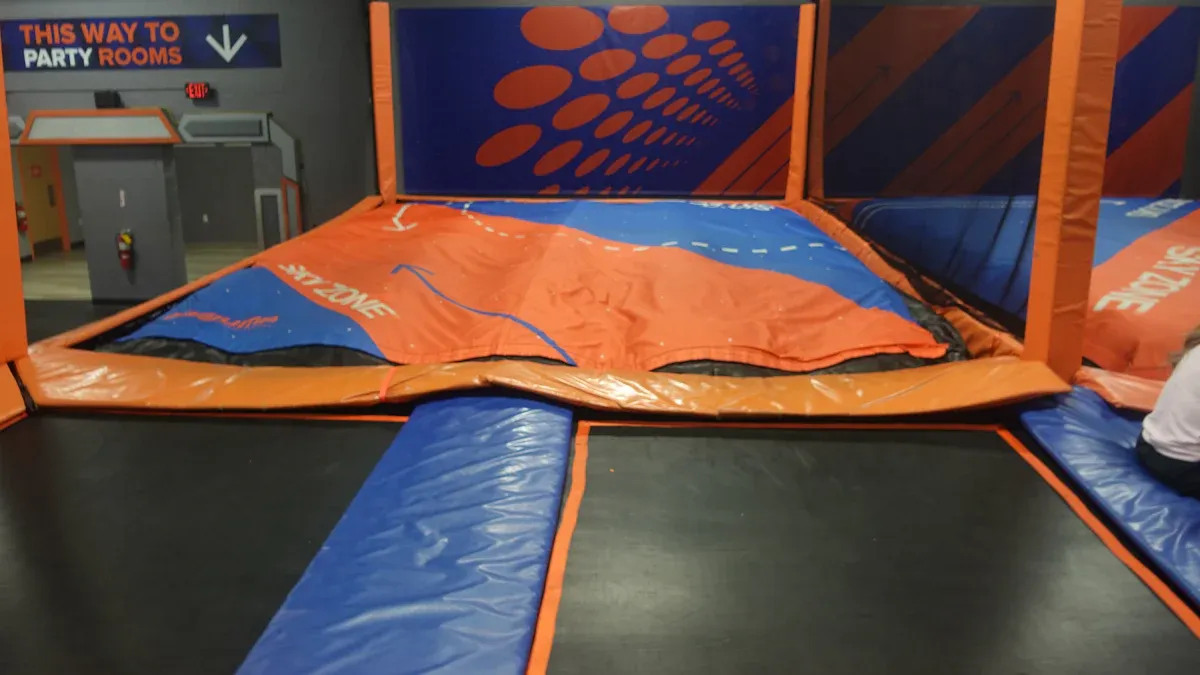
Le coût de construction d'un parc de trampolines aux États-Unis se situe généralement entre 100 000 € et 500 000 €. 🏗️ J'ai constaté que les prix peuvent varier en fonction de l'emplacement, de la taille du bâtiment, des choix d'équipements et des attractions. Voici quelques éléments qui peuvent influencer votre budget :
-
Équipements et conception de l'agencement
-
Assurance et personnel
-
Nombre d'attractions
Lorsque j'ai commencé à chercher des fournisseurs fiables, Play Time Playground s'est démarqué. Leur équipe possède plus de 20 ans d'expérience et propose des équipements certifiés pour aires de jeux intérieures. Ils aident les nouveaux propriétaires avec la conception, les normes de sécurité et le soutien commercial, ce qui en fait un excellent choix pour quiconque se demande combien coûte la construction d'un parc de trampolines.
Quel est le coût de construction d'un parc de trampolines
Fourchette d'investissement typique
Lorsque je me suis demandé pour la première fois combien coûte la construction d'un parc de trampolines, j'ai réalisé que la réponse dépend de l'endroit où vous souhaitez ouvrir, de la taille que vous visez et du type d'expérience que vous souhaitez offrir. Dans certaines régions, les coûts tendent vers le bas, surtout si vous trouvez une bonne affaire immobilière ou choisissez une surface plus petite. Dans les grandes villes ou les zones à forte fréquentation, les prix peuvent augmenter rapidement. J'ai remarqué que la plus grande partie de mon budget était consacrée à l'acquisition d'un espace d'au moins 2 300 à 3 700 mètres carrés. C'est beaucoup d'espace pour sauter, courir et s'amuser !
Voici un aperçu de ce à quoi vous attendre selon les régions :
-
Dans les petites villes, vous pourriez dépenser environ 500 000 $.
-
Dans les grandes zones métropolitaines, les coûts peuvent atteindre 3 millions $ ou plus.
-
La taille de votre parc et les attractions que vous choisissez feront varier votre budget à la hausse ou à la baisse.
Si vous vous demandez combien coûte la construction d'un parc de trampolines avec toutes les options, prévoyez le haut de la fourchette. Si vous souhaitez quelque chose de simple, vous pouvez commencer petit et grandir avec le temps.
Principaux facteurs de coût
Les plus grosses dépenses proviennent de l'immobilier, de l'équipement et du personnel. 🏢🤸♂️👷
Lorsque j'ai analysé combien coûte la construction d'un parc de trampolines, j'ai identifié plusieurs domaines clés qui absorbent la majeure partie du budget. Laissez-moi vous présenter les principaux facteurs de coût dans un tableau pour référence facile :
|
Facteur de coût |
Description |
|---|---|
|
Immobilier |
Les coûts dépendent de si vous construisez une nouvelle installation, louez ou rénovez une ancienne. |
|
Coûts des équipements |
Les coûts des équipements de trampoline varient de 320 000 EUR à 690 000 EUR en fonction de la taille et de la qualité. |
|
Coûts des équipements audio et visuels |
Les installations complètes peuvent coûter entre 50 000 et 100 000 EUR. |
|
Coûts des équipements de bureau et du mobilier |
Les coûts moyens varient de 20 000 à 30 000 EUR. |
|
Coûts de promotion |
Le budget marketing initial peut varier de 5 000 à 10 000 EUR. |
|
Coûts de l'assurance responsabilité civile |
Essentiel à considérer avant d'ouvrir un parc de trampolines. |
J'ai appris que l'emplacement est la décision la plus importante. Si vous choisissez un endroit dans une zone fréquentée, vous paierez plus cher, mais vous pourriez attirer plus de clients. Les coûts des équipements s'accumulent également rapidement, surtout si vous souhaitez des trampolines et des dispositifs de sécurité de haute qualité. N'oubliez pas la technologie, l'assurance et l'embauche d'une excellente équipe.
💡 Astuce : La franchise peut réduire votre risque et vous donner un modèle économique éprouvé. Les parcs franchisés coûtent souvent plus cher au départ, mais ils bénéficient de la reconnaissance de la marque et du soutien. Les parcs indépendants peuvent économiser de l'argent au début, mais ils font face à plus d'essais et d'erreurs. J'ai constaté qu'environ 45% des parcs indépendants échouent en cinq ans, tandis que seulement 5% des franchises avec des investissements supérieurs à 25 000 EUR échouent dans le même laps de temps.
Si vous voulez savoir combien coûte la construction d'un parc de trampolines qui se démarque, concentrez-vous sur la qualité des équipements, un excellent emplacement et un marketing solide. Ces facteurs façonneront votre budget et votre succès.
Aperçu détaillé du coût d'un parc de trampolines
Franchise et immobilier
Les frais de franchise et les coûts immobiliers constituent la base de votre investissement. 🏢
Lorsque j'ai recherché combien coûte la construction d'un parc de trampolines Parc de trampolines, j'ai découvert que les frais de franchise et les dépenses immobilières peuvent varier considérablement. Voici un tableau qui détaille les principaux coûts :
|
Article de coût |
Fourchette de prix |
|---|---|
|
Frais de franchise initiaux |
50 000 $ – 75 000 $ |
|
Frais de formation |
$10,000 |
|
Location immobilière |
50 000 $ – 80 000 $ |
|
Frais d'architecte et permis |
60 000 $ - 75 000 $ |
|
Aménagements locatifs |
600 000 $ – 1 500 000 $ |
|
Exigence de fonds propres minimum |
$500 000 – $600 000 |
J'ai remarqué que l'emplacement est le facteur le plus important. Les zones très fréquentées coûtent plus cher, mais elles attirent plus de visiteurs. Les parcs franchisés facturent également des redevances et des frais de publicité, généralement un pourcentage de vos ventes mensuelles.
Construction et Aménagement
La construction et l'aménagement font rapidement grimper votre budget. 🛠️
J'ai appris que l'aménagement de l'espace et l'ajout de modules de trampoline, d'aires de jeux et de vestiaires peuvent coûter cher. Voici ce que vous devez prendre en compte :
-
Conception, production et installation de trampolines
-
Installations annexes comme les restaurants et les zones de jeu
-
Revêtements de sol, éclairage et concessions alimentaires
Plus le parc est grand, plus les coûts sont élevés. J'ai constaté qu'investir dans un mobilier de qualité contribue à créer une meilleure expérience pour les visiteurs.
Frais, licences et assurances
Les permis, licences et assurances sont essentiels pour une exploitation légale. 📋
J'ai dû prévoir un budget pour l'assurance responsabilité civile, qui coûte généralement entre 5 000 $ et 10 000 $ par an. Il vous faudra également des licences commerciales, des permis de santé et de sécurité, ainsi que des approbations de zonage. Ces coûts varient en fonction de votre ville et de votre État.
Fonds de démarrage et fonds de roulement
Les dépenses de pré-ouverture et le fonds de roulement permettent à votre entreprise de fonctionner sans heurts. 💰
Avant l'ouverture, j'ai mis de côté des fonds pour le loyer, les cautions, le stock, le marketing et la formation du personnel. La plupart des parcs ont besoin de 200 000 à 300 000 $US de fonds de roulement. Cela couvre les dépenses d'exploitation jusqu'à ce que le parc commence à générer des revenus.
📝 Astuce : Planifier ces coûts tôt permet d'éviter les surprises et de maintenir votre projet de parc de trampolines sur la bonne voie.
Coûts de démarrage
Emplacement et bail
Vous devez budgétiser l'emplacement et le bail en premier. 🏢
J'ai constaté que le coût de démarrage le plus important provenait de la sécurisation d'un espace. Les taux de location varient en fonction de la ville, de la taille et de l'état du bâtiment. J'ai cherché un endroit avec un fort trafic piétonnier et suffisamment d'espace pour toutes les attractions. Si vous voulez savoir combien coûte la construction d'un parc de trampolines, commencez par consulter les annonces immobilières commerciales locales. Certains propriétaires demandent des cautions et plusieurs mois de loyer d'avance.
Rénovation et aménagement
Les coûts de rénovation et d'aménagement dépendent de votre vision. 🛠️
J'ai dû rénover mon espace pour y installer des trampolines, des zones de sécurité et des salles de fête. Les coûts de construction comprennent le revêtement de sol, l'éclairage, les toilettes et la peinture. Si vous souhaitez un parc à thème, attendez-vous à des coûts plus élevés. J'ai choisi Play Time Playground pour leurs rendus de conception gratuits et leur installation professionnelle. Leur équipe m'a aidé à créer un agencement qui correspondait à ma marque.
Coûts des équipements
Des équipements de haute qualité sont essentiels pour la sécurité et le plaisir. 🤸
J'ai investi dans des équipements de trampoline certifiés et des modules soft play. Play Time Playground proposait des produits certifiés ASTM et EN, ce qui m'a rassuré. Voici quelques normes de sécurité importantes pour les parcs de trampolines:
|
Norme |
Description |
|---|---|
|
ASTM F2970-22 |
Conception, fabrication, installation et exploitation des parcs de trampolines |
|
ASTM F770-24 |
Propriété, exploitation, maintenance et inspection des manèges |
|
EN 913 |
Norme européenne pour les équipements de gymnastique |
|
EN 1176-1 |
Norme européenne pour la sécurité des équipements d'aires de jeux |
J'ai apprécié que Playtime Playground propose des options de personnalisation, me permettant de choisir les couleurs et les thèmes qui correspondaient à ma vision.
Permis et licences
Les permis et licences maintiennent la légalité de votre entreprise. 📋
J'ai demandé les licences commerciales, les permis sanitaires et les approbations de sécurité incendie. Chaque ville a des règles différentes. J'ai vérifié auprès des autorités locales pour éviter les retards. Certains permis prennent des semaines à traiter, j'ai donc commencé tôt.
Assurance
L'assurance protège votre investissement et vos clients. 🛡️
J'ai acheté plusieurs types d'assurance avant l'ouverture. Voici un aperçu de ce dont j'avais besoin :
|
Type d'assurance |
Description |
|---|---|
|
Assurance responsabilité civile générale |
Couvre les blessures et les dommages matériels |
|
Assurance responsabilité civile produits |
Protège contre les défaillances de l'équipement |
|
Assurance des biens |
Couvre les dommages au bâtiment et aux équipements |
|
Perte d'exploitation |
Couvre les revenus perdus pendant les fermetures |
J'ai parlé avec mon agent d'assurance pour trouver la meilleure couverture pour mon parc.
📝 Astuce : Choisir des équipements certifiés et une assurance adéquate vous aide à éviter des erreurs coûteuses et à maintenir la sécurité de votre parc.
Dépenses courantes
Personnel
La dotation en personnel est l'un des coûts courants les plus importants pour un parc de trampolines. 👷
J'ai besoin d'une équipe pour gérer l'accueil, superviser les sauteurs, nettoyer les locaux et organiser des fêtes. J'embauche généralement des responsables, des surveillants de sécurité, des animateurs de fêtes et du personnel de nettoyage. Les salaires dépendent de l'emplacement et de l'expérience. Je prévois également les charges sociales et les avantages sociaux. Si je veux que mon parc reste sûr et accueillant, j'investis dans la formation et je m'assure d'avoir suffisamment de personnel pendant les week-ends chargés.
|
Rôle |
Coût mensuel typique |
|---|---|
|
Manager |
3 500 – 5 000 € |
|
Surveillant de sécurité |
2 000 – 3 000 € |
|
Animateur de fête |
1 500 – 2 500 € |
|
Personnel de nettoyage |
1 200 – 2 000 € |
Services publics et maintenance
Services publics et maintenance peut coûter entre 5 500 et 15 000 € par mois. 💡🔧
Je paie l'électricité, l'eau, le chauffage et la climatisation. Les factures de services publics varient généralement de 2 500 $ à 7 000 $ chaque mois, selon la saison et le nombre de visiteurs. L'entretien et les réparations ajoutent encore 4 000 $ à 8 000 $ par mois. Je planifie des inspections régulières pour assurer la sécurité des trampolines et des équipements de jeu. Si je repère un problème tôt, j'économise de l'argent et j'évite les temps d'arrêt.
-
Électricité, eau, chauffage : 2 500 $ – 7 000 $/mois
-
Entretien et réparations : 4 000 $ – 8 000 $/mois
🛠️ Astuce : L'entretien régulier assure la sécurité des équipements et m'aide à éviter des réparations coûteuses plus tard.
Marketing
Le marketing maintient mon parc de trampolines actif toute l'année. 📢
Je dépense de l'argent en publicités sur les réseaux sociaux, en prospectus locaux et en événements spéciaux. J'organise également des promotions pour les anniversaires et les réservations de groupe. Mon budget marketing mensuel se situe généralement entre 2 000 $ et 5 000 $. Si je veux attirer de nouveaux clients, je mets à jour mon site web et je publie des photos de sauteurs heureux. Je suis quelles publicités fonctionnent le mieux et j'ajuste ma stratégie pour en tirer le meilleur parti.
Fournitures
Les fournitures comprennent tout, des produits de nettoyage aux collations de stands de restauration. 🧃🧹
Je fais le stock de produits en papier, de trousses de premiers secours et d'équipements de sécurité. J'achète aussi de la nourriture et des boissons pour le snack-bar. Les fournitures coûtent environ 1 000 à 3 000 € par mois. Si je manque de quelque chose, je le commande immédiatement. Garder mon parc propre et bien approvisionné m'aide à offrir une excellente expérience à chaque visiteur.
Coûts cachés et imprévus
Retards de construction
Les retards de construction peuvent rapidement grever votre budget et repousser votre date d'ouverture. 🏗️
J'ai appris que lorsque la construction s'arrête, les factures continuent d'arriver. Les frais généraux s'accumulent, et je dois attendre plus longtemps pour accueillir les clients. Voici ce que j'ai remarqué lors de ma propre construction :
-
J'ai payé le loyer et les charges même lorsque les travaux étaient interrompus.
-
Mes revenus futurs ont été retardés, ce qui a rendu la trésorerie tendue.
-
Certains clients ont perdu confiance, j'ai donc manqué les premières recommandations.
Astuce : J'ai toujours mis de côté des fonds supplémentaires pour les retards imprévus. Cela m'aide à rester calme et à faire avancer le projet.
Mises à niveau de sécurité
Mises à niveau de sécurité coûtent souvent plus cher que prévu, mais elles sont essentielles. 🛡️
J'ai constaté que les inspections de sécurité régulières et les frais de conformité s'accumulent rapidement. Parfois, j'ai dû repenser certaines parties de mon parc pour répondre aux nouvelles normes. Voici un tableau montrant les coûts cachés courants:
|
Type de coût |
Description |
|---|---|
|
Coûts de conformité |
Frais d'enregistrement de l'entreprise et d'inspections de sécurité |
|
Inspections de sécurité |
Vérifications régulières pour respecter les normes de sécurité |
|
Rénovation et conception |
Coûts supplémentaires pour les installations de sécurité et les modifications de conception |
|
Frais d'assurance |
Couverture complète pour accidents et événements |
|
Frais de licence |
Frais cachés pour la licence du parc |
|
Fonds de prévoyance |
Argent pour les réparations imprévues |
Remarque : Je choisis toujours des équipements certifiés auprès de fournisseurs de confiance comme Playtime Playground. Cela m'aide à éviter des mises à niveau coûteuses plus tard.
Fluctuations saisonnières
Les baisses saisonnières peuvent nuire à mes profits, surtout pendant les mois creux. 🌧️
J'ai remarqué que moins de clients visitent en été ou pendant les vacances scolaires. Je planifie à l'avance en économisant de l'argent supplémentaire pendant les saisons chargées. De cette façon, je couvre les dépenses lorsque les revenus baissent.
-
J'organise des promotions spéciales pour attirer les clients pendant les périodes creuses.
-
J'ajuste le personnel pour qu'il corresponde à la demande et j'économise sur la masse salariale.
Frais de franchise
Les frais de franchise sont plus élevés que les coûts de démarrage indépendants, mais ils s'accompagnent d'un soutien et d'une puissance de marque. 💼
Lorsque j'ai comparé les options, j'ai constaté de grandes différences dans les frais et l'investissement total. Voici un aperçu rapide :
|
Franchise |
Frais de franchise |
Fourchette d'investissement total |
|---|---|---|
|
Urban Air |
$100,000 |
3707592 $ – 8192274 $ |
|
Altitude |
$50,000 |
1625000 $ – 2957500 $ |
-
Les parcs franchisés coûtent plus cher au départ, mais je bénéficie de systèmes éprouvés et d'une aide marketing.
-
Les parcs indépendants sont moins chers au départ, mais je perds la reconnaissance de la marque et le support.
Astuce : Je pèse les avantages du support de franchise par rapport aux frais plus élevés avant de prendre ma décision.
Profitability and ROI
Sources de revenus
You can earn money from several sources in a trampoline park. 💵
When I opened my park, I quickly saw that ticket sales made up most of my income. I also found other ways to boost my revenue. Here are the main streams:
-
General admission tickets: Most guests pay for jump time.
-
Birthday parties and group events: These bookings bring in big groups and higher profits.
-
Food and beverage sales: Snacks and drinks add up fast.
-
Merchandise: T-shirts, socks, and souvenirs sell well.
-
Special attractions: Ninja courses, climbing walls, and arcade games offer extra fun for a fee.
🎉 Astuce : I always promote party packages and special events to fill my calendar.
Profit Margins
Typical profit margins for trampoline parks range from 20% to 35%. 📈
I keep my margins healthy by controlling costs and offering premium experiences. Here’s a quick look at how my expenses and profits break down:
|
Revenue Source |
% of Total Revenue |
Typical Margin |
|---|---|---|
|
Admissions |
60% |
30% |
|
Parties/Events |
20% |
40% |
|
Food & Beverage |
10% |
50% |
|
Merchandise/Other |
10% |
25% |
I noticed that parties and food sales often have the highest margins. I focus on these areas to grow my profits.
Break-Even Point
Most trampoline parks reach break-even in 12 to 24 months. ⏳
I planned my budget so I could cover all costs until my park became profitable. The break-even point depends on location, size, and how well I market my business. I track my monthly revenue and expenses to see when I start making a profit.
📊 Remarque : Careful planning and strong marketing help me reach break-even faster and keep my business growing.
Budgeting and Cost Control
Creating a Budget
Start with a clear, detailed budget. 📝
When I planned my trampoline park, I listed every expense I could think of. I broke costs into categories like rent, equipment, staffing, and marketing. I used a simple table to track my spending:
|
Expense Category |
Estimated Cost |
|---|---|
|
Rent/Lease |
$80,000/year |
|
$400,000 |
|
|
Personnel |
$120,000/year |
|
Marketing |
$30,000/year |
|
Assurance |
$10,000/year |
I updated my budget every month. This helped me spot problems early and adjust my plans.
Reducing Costs
Cut costs without sacrificing quality. 💡
I found several ways to save money while building my park:
-
I negotiated with suppliers for better prices.
-
I chose energy-efficient lighting to lower utility bills.
-
I hired part-time staff during slow seasons.
-
I used social media for free marketing.
I always focused on safety and customer experience. Cheap equipment can lead to expensive repairs later.
Avoiding Pitfalls
Watch out for common budgeting mistakes. ⚠️
I learned to avoid these pitfalls:
-
Underestimating renovation costs
-
Forgetting about insurance and permits
-
Ignoring seasonal dips in revenue
-
Not setting aside emergency funds
Astuce : I always keep a contingency fund for surprises. This keeps my business safe when things don’t go as planned.
I review my budget often. Staying flexible helps me control costs and keep my trampoline park profitable.
How much can you charge customers?
You can usually charge $12 to $25 per person for general admission. 🎟️
When I set my prices, I looked at what other trampoline parks charged in my area. Most parks offer hourly jump sessions. I noticed that weekends and holidays cost more. Special attractions or longer sessions also raise the price.
Here’s a quick table showing typical pricing:
|
Ticket Type |
Price Range |
Notes |
|---|---|---|
|
1-Hour Admission |
$12 – $18 |
Most popular option |
|
2-Hour Admission |
$20 – $25 |
Better value for families |
|
All-Day Pass |
$30 – $40 |
Includes unlimited jumping |
|
Toddler Time |
$8 – $12 |
For kids under 5 |
|
Group Rates |
$10 – $15/person |
Usually for 10+ guests |
Birthday party packages often cost $200 to $400 per group. 🎉
I love hosting parties at my park. Most packages include jump time, a party room, food, and a host. I offer upgrades like pizza, themed decorations, or extra attractions. These add-ons help me boost revenue.
Extra attractions can cost $3 to $10 each. 🧗♂️
If guests want to try the ninja course, climbing wall, or arcade games, I charge a small fee. This keeps my base price affordable and lets customers choose their own adventure.
💡 Astuce : I always check what local competitors charge. I adjust my prices for busy seasons and offer discounts during slow months.
I recommend offering bundle deals and memberships. 🏆
Many families visit often. I sell monthly passes or punch cards for regular jumpers. These deals encourage repeat visits and help me build a loyal customer base.
En résumé :
I set my prices based on local demand, park size, and attractions. I keep my pricing simple and offer options for every budget. This helps me attract more guests and grow my business.
How Much Profit Can You Extract from an Indoor Trampoline Park?
You can expect annual profits between $100,000 and $600,000 from a well-run trampoline park. 💰
When I first opened my park, I wanted to know how much profit I could actually make. The answer depends on your location, size, and how well you manage costs. I track my revenue and expenses every month. This helps me see where my money goes and how much I keep.
Here’s a quick breakdown of typical profit factors:
|
Facteur |
Impact on Profit |
|---|---|
|
Emplacement |
High-traffic areas boost sales |
|
Park Size |
Bigger parks earn more, but cost more |
|
Attractions |
Extra features increase revenue |
|
Operational Costs |
Lower costs mean higher profit |
|
Marketing |
Strong marketing brings more guests |
Most parks see profit margins between 20% and 35%. 📈
I focus on keeping my costs low and my guest experience high. I offer party packages, memberships, and special events. These options help me earn more than just ticket sales.
Here’s what I do to maximize profit:
-
I run birthday parties and group events.
-
I sell snacks, drinks, and branded merchandise.
-
I add new attractions like ninja courses or climbing walls.
-
I offer memberships for repeat visitors.
📝 Astuce : I always review my expenses and look for ways to save. Small changes add up over time.
En résumé :
If you manage your trampoline park well, you can extract solid profits. I keep my business flexible and listen to customer feedback. This helps me grow my revenue and enjoy long-term success.
Design your Trampoline Park perfectly with Playtime playground
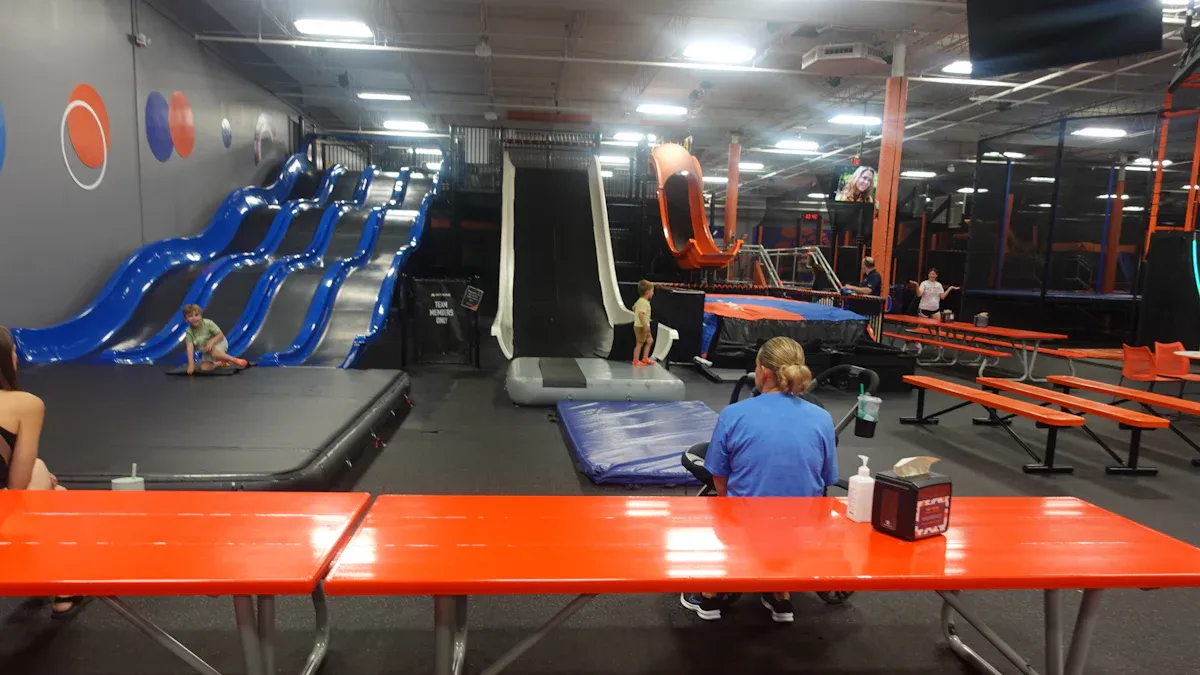
Want a trampoline park that stands out? I always choose Play Time Playground for my projects. Their team makes the design process easy and fun. Here’s how I get the perfect park every time:
1. Start with a free custom design.
Play Time Playground offers free design renderings. I send them my ideas, and they turn my vision into a 3D plan. I can see how every trampoline, slide, and play area fits together before I spend a dime. 🖼️
2. Pick from endless themes and options.
I love their huge selection of themes—ocean, forest, candy, and more. I can mix and match colors, add arcade machines, or create a ninja course. Their customization options help me build a park that matches my brand and excites my guests. 🎨
3. Trust in safety and quality.
I never worry about safety. Play Time Playground uses ASTM and EN certified materials. Their equipment feels sturdy and looks great. I know kids will play safely, and parents will feel confident. 🛡️
4. Get expert support from start to finish.
Their team helps me at every step. I get advice on layout, safety, and even marketing. They handle shipping and installation, so I can focus on opening day. 🚚
Astuce : I always ask for their entrepreneurship guidance. Their experience saves me time and money.
Here’s a quick table of what Play Time Playground offers:
|
Caractéristique |
Avantage |
|---|---|
|
Free Design Rendering |
Visualize your park early |
|
Certified Equipment |
Meets top safety standards |
|
Custom Themes |
Match your brand and vision |
|
Full Installation |
Hassle-free setup |
|
Business Support |
Guidance for new owners |
Ready to design your dream trampoline park? I recommend Play Time Playground for a smooth, creative, and safe experience. Let’s build something amazing together! 🚀
Building a trampoline park costs a lot, but smart planning makes it easier. 🏗️ I focus on real estate, equipment, staffing, and ongoing expenses. I always talk to experts like Play Time Playground for custom solutions and safety advice. If you want to get started, here’s what I recommend:
-
Research your local market 📍
-
Compare equipment options 🛝
-
Ask for professional guidance 💡
A well-planned trampoline park can bring big rewards and happy customers!
FAQ
How long does it take to build a trampoline park?
Usually 6 to 12 months. 🕒
I found that the timeline depends on location, permits, and construction speed. If I plan well and choose experienced suppliers, I can open faster.
What safety standards should I follow?
ASTM and EN certifications are essential. 🛡️
I always pick equipment that meets these standards. They help me keep guests safe and avoid legal issues.
Can I customize my trampoline park design?
Yes, customization is possible. 🎨
I work with suppliers like Play Time Playground to choose themes, colors, and attractions. Custom designs help my park stand out.
What are the main ongoing expenses?
Staffing, utilities, and maintenance top the list. 💸
Here’s a quick table:
|
Expense |
Coût mensuel typique |
|---|---|
|
Personnel |
$8,000 – $12,000 |
|
Utilities |
$5,500 – $15,000 |
|
Maintenance |
$4,000 – $8,000 |
Do I need insurance for my trampoline park?
Absolutely, insurance is required. 📝
I always get liability, property, and business interruption coverage. Insurance protects my investment and keeps my business safe.