






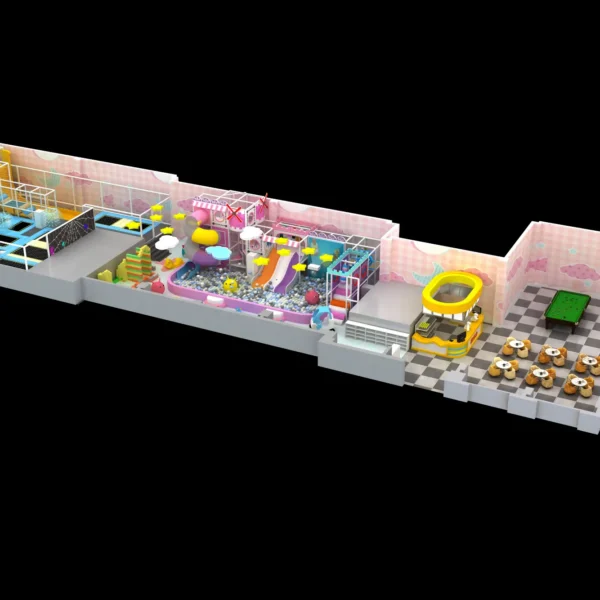
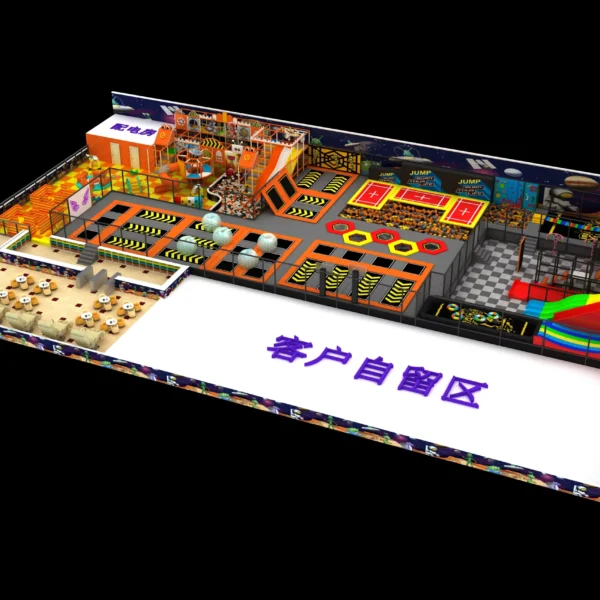
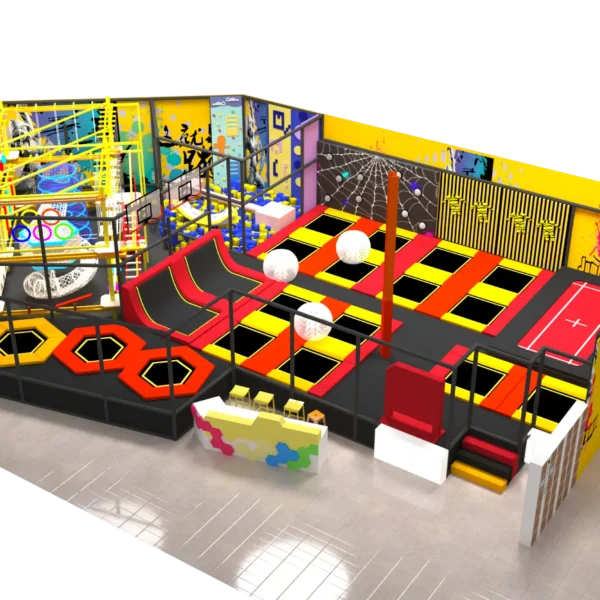
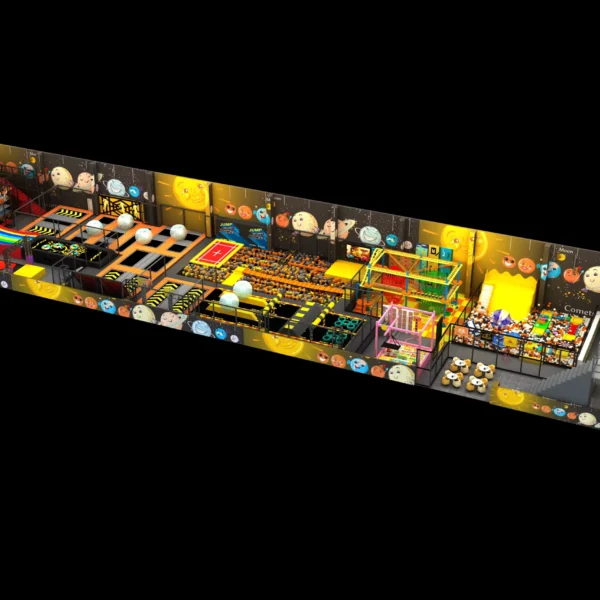
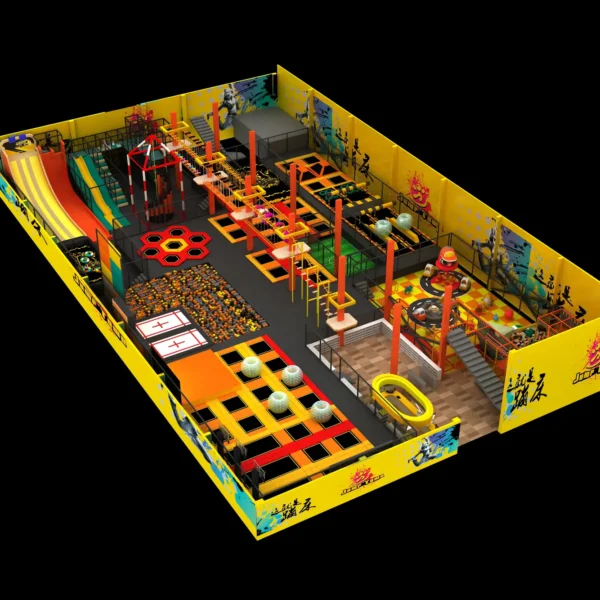
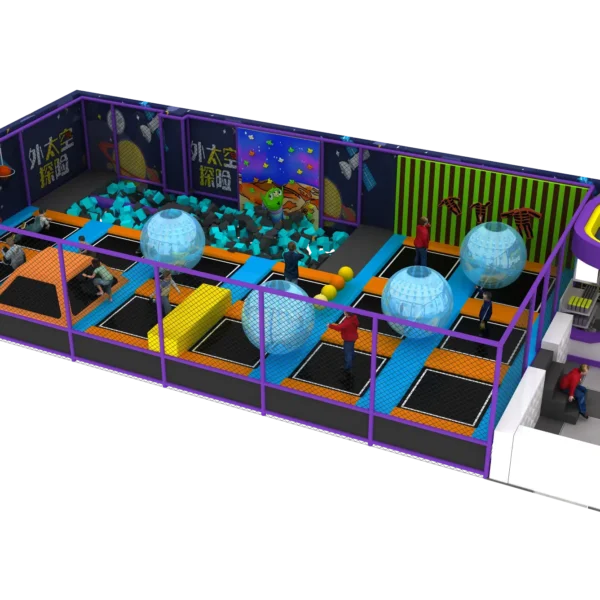
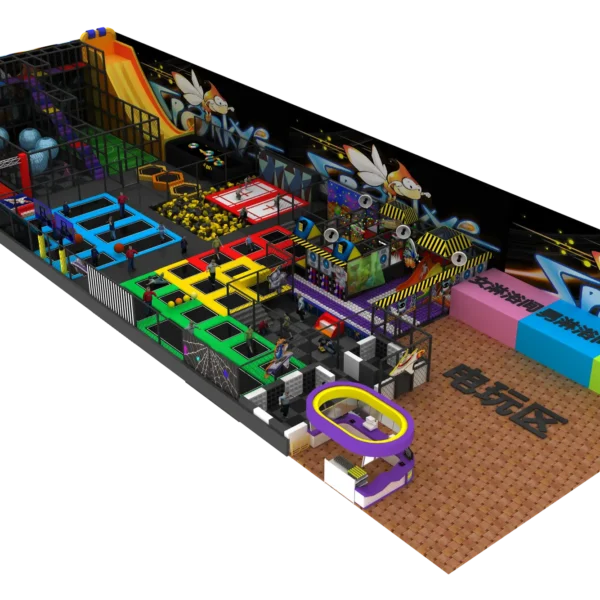


The free-jump reference shows a connected court with flat and angled trampoline surfaces. Confirm the final court arrangement, user requirements and surrounding circulation in the approved layout.
The trapeze reference pairs a hanging element with a designated landing area. The final platform, landing system, dimensions and operating requirements must be confirmed in the project documents.
Dedicated areas with varied obstacles that cater to those looking to practice parkour skills, enhancing agility and coordination.
Strategically positioned to allow users to leap off angled surfaces, adding a unique dimension to the trampoline experience.
Aimed at more experienced users looking to perform advanced tricks and enjoy higher bounces.
The honeycomb option uses a visible hexagonal court pattern. Compare the shape and circulation effect, then confirm the final dimensions, spring system and technical requirements in the selected configuration.
A long stretch for practicing consecutive jumps and somersaults, perfect for both learning and displaying tumbling skills.
The toddler-area reference shows a separate enclosed activity zone for younger-child use. Age requirements, equipment, access, supervision and separation from other attractions must be confirmed for the venue.
For those seeking a more challenging physical engagement, offering a variety of obstacles to conquer.
Combines climbing with digital technology, where users interact with a game interface while they climb.
The page shows climbing-wall and interactive-wall categories that can sit beside the trampoline zones. Confirm the selected system, footprint, clearances and technical requirements before including either option.
These areas are designed for dynamic physical activities that test agility, speed, and strategic thinking.
Offers an exhilarating experience as users glide between points on a steel rope, providing a bird's-eye view of the entire park.
A challenging activity that enhances agility and dexterity through a series of elevated obstacles.
Features interactive trampoline games that enhance physical activity with immersive digital experiences, available around the clock.
Combines fitness and fun by challenging users to compete in speed and agility through digital interactions.
The multi-court reference groups more than one activity format within a defined court area. The final sports or game uses, markings, enclosure and technical scope must be listed in the proposal.
Integrates parkour with free running to create a dynamic experience focusing on balance, strength, and agility.
Elevates traditional dodgeball in a fully enclosed, transparent cage, offering both fun and competitive play.
Challenges users with a three-dimensional maze that includes climbable and hangable elements for a physically engaging puzzle.
Specifically designed for younger children, this maze features walkable elements and slides, promoting active play in a fun setting.
Offers a multi-level adventure with a variety of obstacles tailored for younger kids, focusing on a mix of physical skills and fun challenges.
The soft-play category adds lower-profile play forms beside the trampoline attractions. Confirm the selected elements, age requirements, boundaries and relationship to circulation in the venue layout.
Other visible attraction categories include a slackline, foam pit, rotating beam, airbags and a halfpipe-style ramp. Treat these as comparison options until the quotation confirms the exact activity and landing systems.