






Idee per temi di parchi giochi indoor per locali commerciali
Il miglior tema per un parco giochi indoor è quello che può essere espresso attraverso le attrezzature, preservando al contempo le linee visive per la supervisione, la zonizzazione per età, la circolazione, l'accesso per la pulizia e l'identità del locale. Gli acquirenti commerciali dovrebbero selezionare un tema solo dopo aver confermato il tipo di locale, l'area operativa utilizzabile, l'altezza libera, la fascia d'età target e le attrazioni richieste. Concetti come giungla, oceano, castello, città, pastello o cyber possono funzionare, ma la loro idoneità varia tra un asilo nido, un centro giochi in un centro commerciale, un angolo caffè, un resort e un FEC con attrazioni miste. Questa guida confronta 12 direzioni tematiche e spiega come valutare l'adattamento del layout, la compatibilità delle attrezzature, la manutenzione, il rischio di proprietà intellettuale, l'ambito dei componenti a tema, la spedizione e la revisione locale.
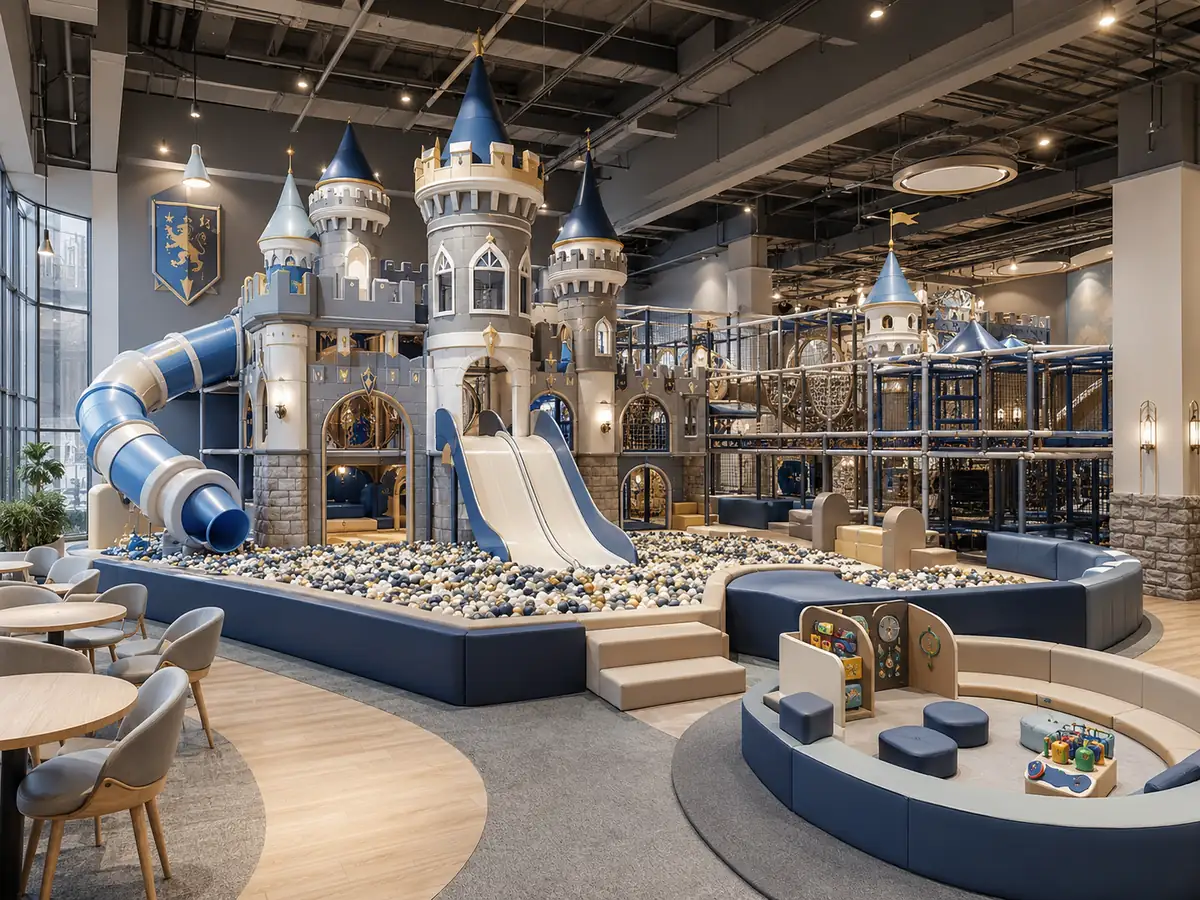
Confronto rapido dei temi per parchi giochi indoor commerciali
La tabella seguente fornisce un confronto preliminare delle direzioni tematiche comuni. L'idoneità finale dipende ancora dalle dimensioni del locale, dall'età del target, dalla selezione delle attrezzature, dal flusso operativo e dai requisiti locali.
Dopo aver selezionato una direzione, gli acquirenti possono sfogliare le attrezzature per parchi giochi indoor a tema e confrontare quali strutture possono esprimere il concetto nello spazio disponibile.
| Tema | Locale più adatto | Fascia d'età principale | Attrezzature adatte | Principale preoccupazione di pianificazione |
|---|---|---|---|---|
| Giungla e safari | Centri commerciali, FEC, hotel, resort | Dalla scuola materna all'adolescenza | Giochi multilivello, ponti, arrampicata e scivoli | Evitare l'affollamento visivo |
| Oceano e sottomarino | Centri commerciali, resort, FEC | Dai bambini piccoli all'adolescenza | Piscine di palline, tunnel e scivoli a onda | Mantenere un'illuminazione di supervisione chiara |
| Spazio e Galassia | FEC, centro commerciale, sede scientifica | Bambini in età scolare | Ninja, arrampicata, tunnel e giochi interattivi | Gli effetti oscuri non devono ridurre la visibilità |
| Foresta e Natura | Asilo nido, caffetteria, hotel | Dai neonati ai bambini piccoli | Soft play, pannelli sensoriali e giochi di equilibrio | Mantenere le finiture facili da pulire |
| Caramelle e Dolci | Centro commerciale, locale per feste | Dai neonati ai bambini piccoli | Soft play, scivoli e aree festa | Le superfici chiare mostrano lo sporco rapidamente |
| Città e gioco di ruolo | Centro di intrattenimento familiare, scuola dell'infanzia, centro commerciale | Dalla scuola dell'infanzia a bambini più piccoli | Mini negozi, veicoli e giochi di finzione | Le stanze piccole possono ridurre la visibilità |
| Costruzioni e industriale | Centro di intrattenimento familiare, spazio comunitario | Dalla scuola materna all'adolescenza | Arrampicata, gioco di percorso a ostacoli e blocchi in schiuma | Mantenere i dettagli industriali a misura di bambino |
| Sport e Sfide | FEC, palestra, parco trampolini | Bambini più grandi e adolescenti | Percorso ninja, trampolini e arrampicata | Zone separate ad alta energia |
| Castello e Fantasy | Centro commerciale, resort, location per feste | Dalla scuola materna all'adolescenza | Torri, scivoli, ponti e giochi di ruolo | Le strutture decorative influenzano la visibilità |
| Pastello per bambini piccoli | Asilo nido, caffetteria, scuola dell'infanzia | Dai bambini piccoli alla prima infanzia | Soft play basso, gioco sensoriale e mini scivoli | Mantenere il contrasto visivo |
| Tecnologia e Cyber | FEC, sala giochi | Bambini più grandi e adolescenti | Giochi interattivi, ninja e trampolino | I sistemi elettronici necessitano di accesso per la manutenzione |
| Cultura locale o punto di riferimento | Centro commerciale, locale turistico, resort | Ampio | Strutture personalizzate e gioco di ruolo | Originalità e revisione culturale |
Seleziona temi in base all'obiettivo commerciale
La selezione del tema diventa più semplice quando l'operatore definisce innanzitutto l'obiettivo commerciale. La tabella seguente collega gli obiettivi comuni del locale alle direzioni tematiche e alle condizioni operative che devono essere verificate prima dell'approvazione del progetto.
| Obiettivo commerciale | Direzioni tematiche da considerare | Priorità attrezzature | Controllo acquirente prima dell'approvazione |
|---|---|---|---|
| Attirare traffico pedonale dal centro commerciale | Castello, giungla, dolciumi, oceano | Elemento d'ingresso d'impatto, scivoli visibili, gioco multilivello compatto | Visibilità vetrina, controllo biglietti e spazio coda |
| Aumentare l'attrattiva per le feste di compleanno | Dolciumi, fantasia, oceano, punto di riferimento locale | Punti fotografici, sale per feste, giochi per bambini più piccoli | Circolazione per feste, separazione aree ristoro e piano di pulizia |
| Servire gruppi di età mista | Giungla, città, cultura locale, fantasia ampia | Area per bambini piccoli più struttura principale e area sfide opzionale | Suddivisione per età, linee visive e separazione dei percorsi |
| Rivolto a bambini più grandi e gioco di sfida ripetuto | Sport, cyber, spazio, costruzioni | Ninja, arrampicata, trampolino e attività a tempo | Personale, supervisione, manutenzione e separazione aree ad alta energia |
| Creare un ambiente tranquillo e accogliente per i genitori | Foresta, pastello per bambini piccoli, oceano compatto | Soft play basso, gioco sensoriale e posti a sedere aperti | Acustica, visibilità dei posti a sedere e finiture facili da pulire |
| Costruisci un'identità di destinazione | Cultura locale, fantasia, giungla o oceano su larga scala | Ingresso personalizzato, zone a tema collegate e segnaletica coordinata | Design originale, piano di espansione e strategia di sostituzione |
Come scegliere un tema prima di guardare esempi
Confermare il tipo di locale
Un centro commerciale potrebbe necessitare di un elemento d'ingresso d'impatto e di un chiaro controllo dei biglietti. Un asilo nido di solito richiede strutture più basse, un linguaggio visivo più morbido e una supervisione aperta. Un centro di intrattenimento familiare potrebbe richiedere diverse zone di attrazione collegate da un concetto visivo più ampio.
Conferma il gruppo di età target
Le aree per bambini piccoli necessitano normalmente di attrezzature più basse, storie semplici e percorsi chiari. Le strutture per bambini più grandi possono supportare concetti sportivi, spaziali, cibernetici e avventurosi che funzionano con attrazioni più impegnative.
Conferma il mix di attrezzature
Il tema dovrebbe essere sviluppato attorno alle attrazioni che verranno installate, tra cui soft play, strutture multilivello, piscine di palline, scivoli, campi da trampolino, percorsi ninja, arrampicata e gioco di ruolo.
Conferma l'area e l'altezza del soffitto
Un locale di 100 mq richiede un tema più semplice rispetto a un FEC di 1.000 mq. Colonne, ingressi, uscite, vie di fuga, posti a sedere per i genitori e accesso per l'installazione devono essere considerati prima di approvare la decorazione dettagliata.
Utilizza una Scheda di Valutazione per la Scelta del Tema
Invece di scegliere solo in base all'aspetto, valuta ogni concetto selezionato in base agli stessi criteri di progetto. La ponderazione di esempio seguente è uno strumento di pianificazione definito dall'acquirente, non uno standard di settore. Adattala per riflettere le priorità operative del locale.
| Fattore di valutazione | Ponderazione illustrativa dell'acquirente | Domande da porre |
|---|---|---|
| Adatto all'età target | 20% | Il linguaggio visivo e il livello delle attrezzature sono adatti alla fascia d'età principale? |
| Compatibilità delle attrezzature | 20% | Il tema può essere espresso attraverso le strutture stesse, non solo tramite grafiche murali? |
| Visibilità operativa | 15% | Il personale e i genitori possono osservare ingressi, uscite e zone di gioco principali? |
| Adattamento alla sede e al soffitto | 15% | Il concetto funziona con colonne, altezza del soffitto e superficie calpestabile utilizzabile? |
| Carico di manutenzione | 10% | I componenti stampati, imbottiti, scolpiti ed elettronici sono sostituibili? |
| Valore del brand e fotografico | 10% | Il tema supporta l'identità della location e l'uso per feste o social media? |
| Flessibilità di espansione | 10% | Can future zones use the same theme without redesigning the full venue? |
Before selecting a theme, review the available Attrezzature per parco giochi indoor categories, compare layout directions by usable floor area, and identify which attractions are essential before decorative work begins.
1. Jungle and Safari Theme
Jungle and safari themes are adaptable because they can support imaginative play and physical exploration. They are suitable for shopping malls, family entertainment centers, hotels and resorts. Common design elements include treehouse-style towers, rope bridges, climbing nets, tunnels and original animal-inspired soft play.
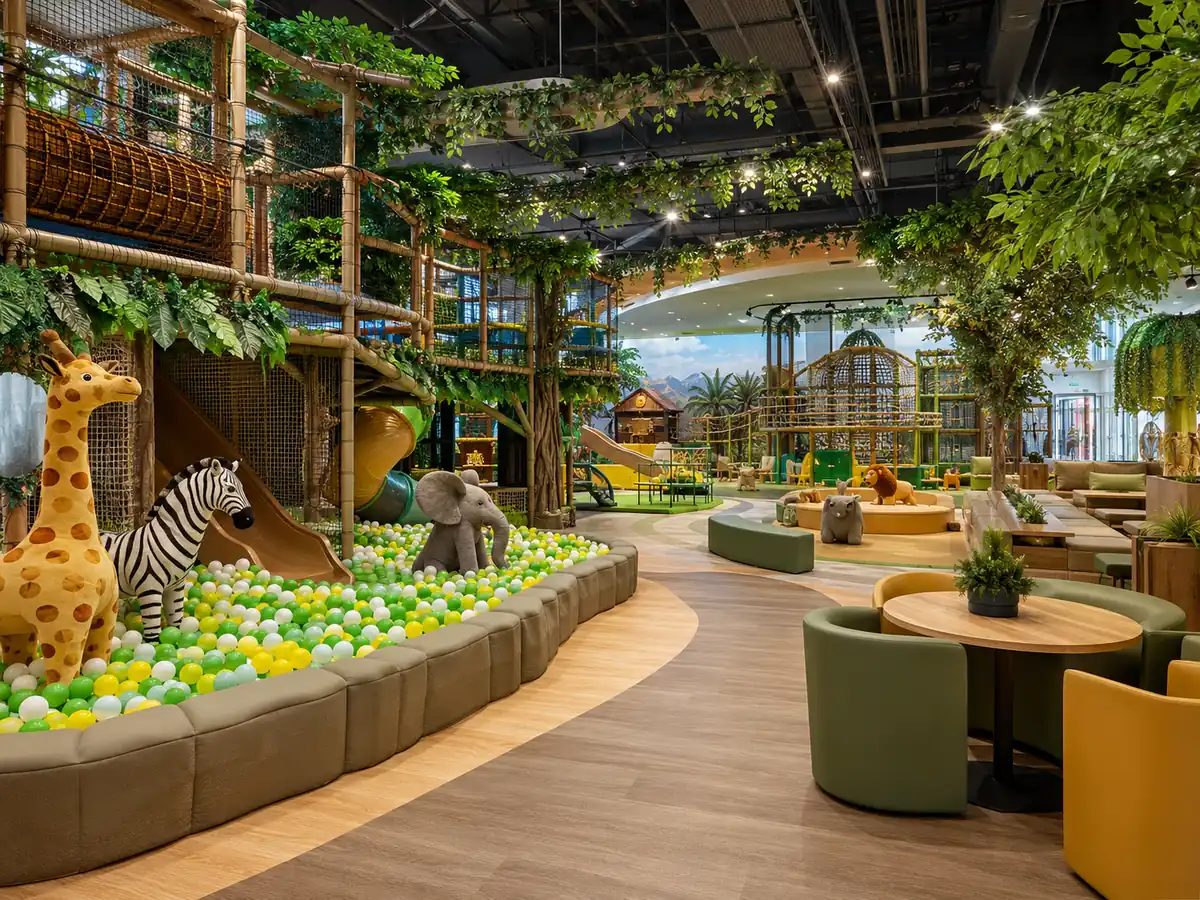
This direction works particularly well when the equipment mix emphasizes climbing, bridges and multi-level movement. The main design risk is overcrowding the venue with decorative animals, artificial plants and printed backgrounds that interfere with supervision or maintenance.
2. Ocean and Underwater Theme
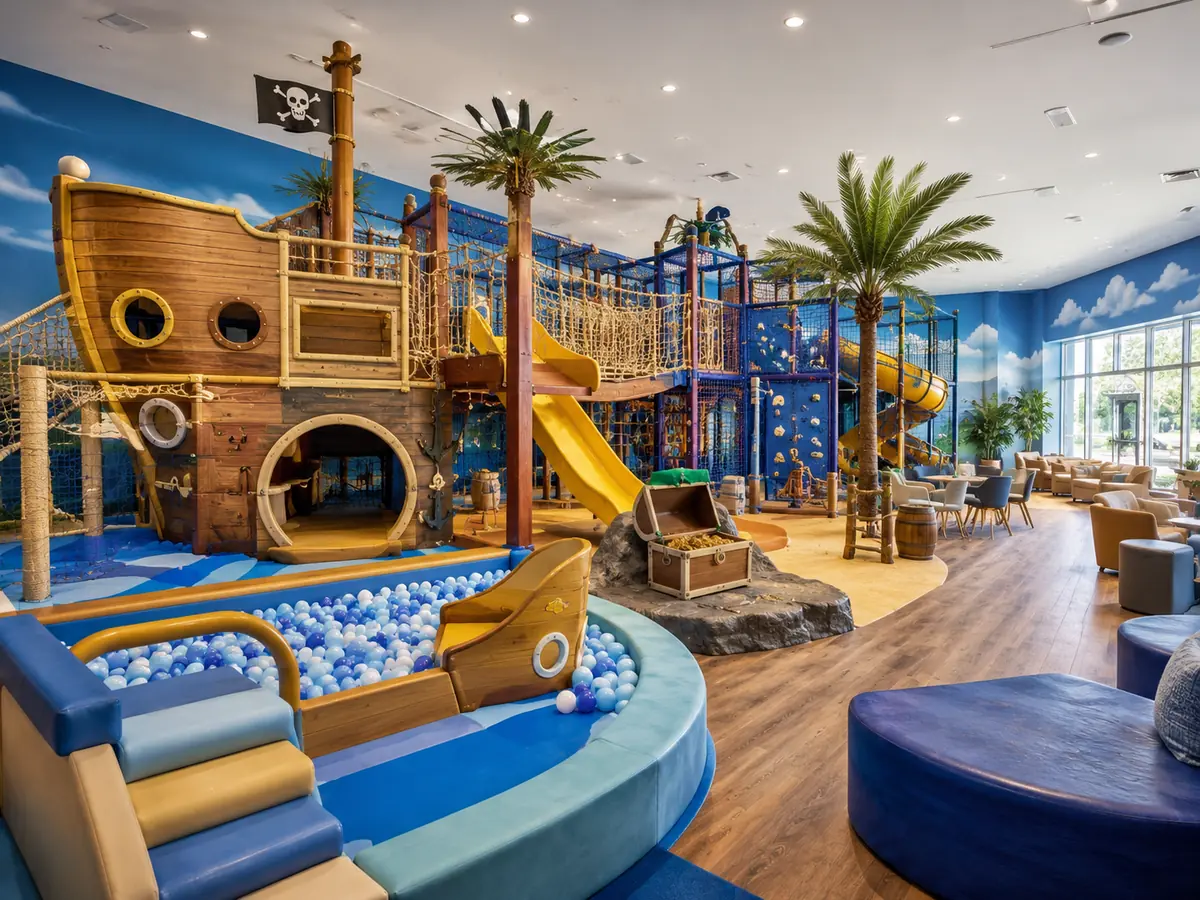
Ocean themes suit malls, resorts, hotels and family entertainment centers. They can support wave-shaped slides, submarine-inspired tunnels, coral-form soft play and blue-and-white ball pools.
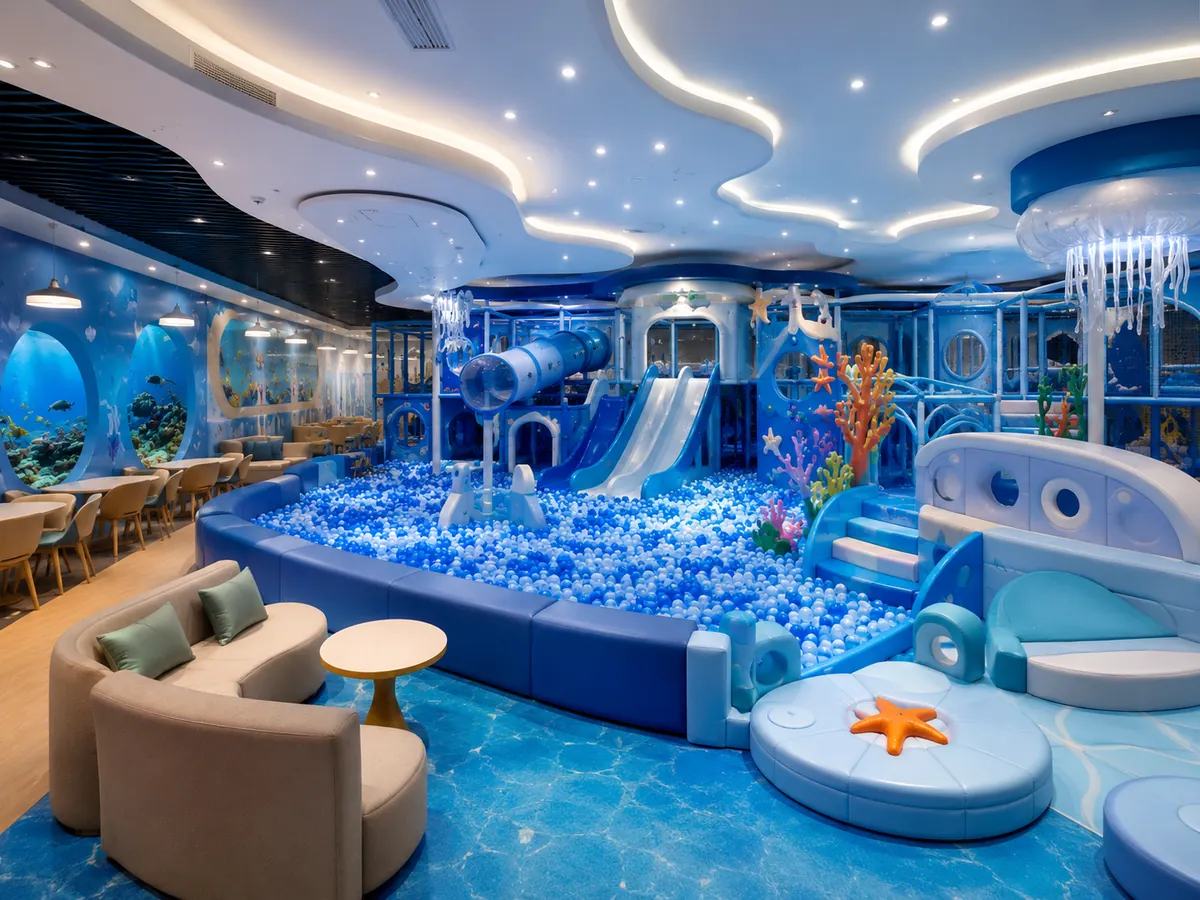
Lighting requires careful planning. Dark blue ceilings and low light may create an underwater feeling, but they can also reduce visibility. A practical commercial layout should remain bright enough for supervision, inspection and cleaning.
3. Space and Galaxy Theme
Space and galaxy themes are generally stronger for school-age children, larger FECs and venues with interactive attractions. Suitable equipment may include rocket-style slides, climbing towers, tunnels, ninja obstacles and projection-based play.
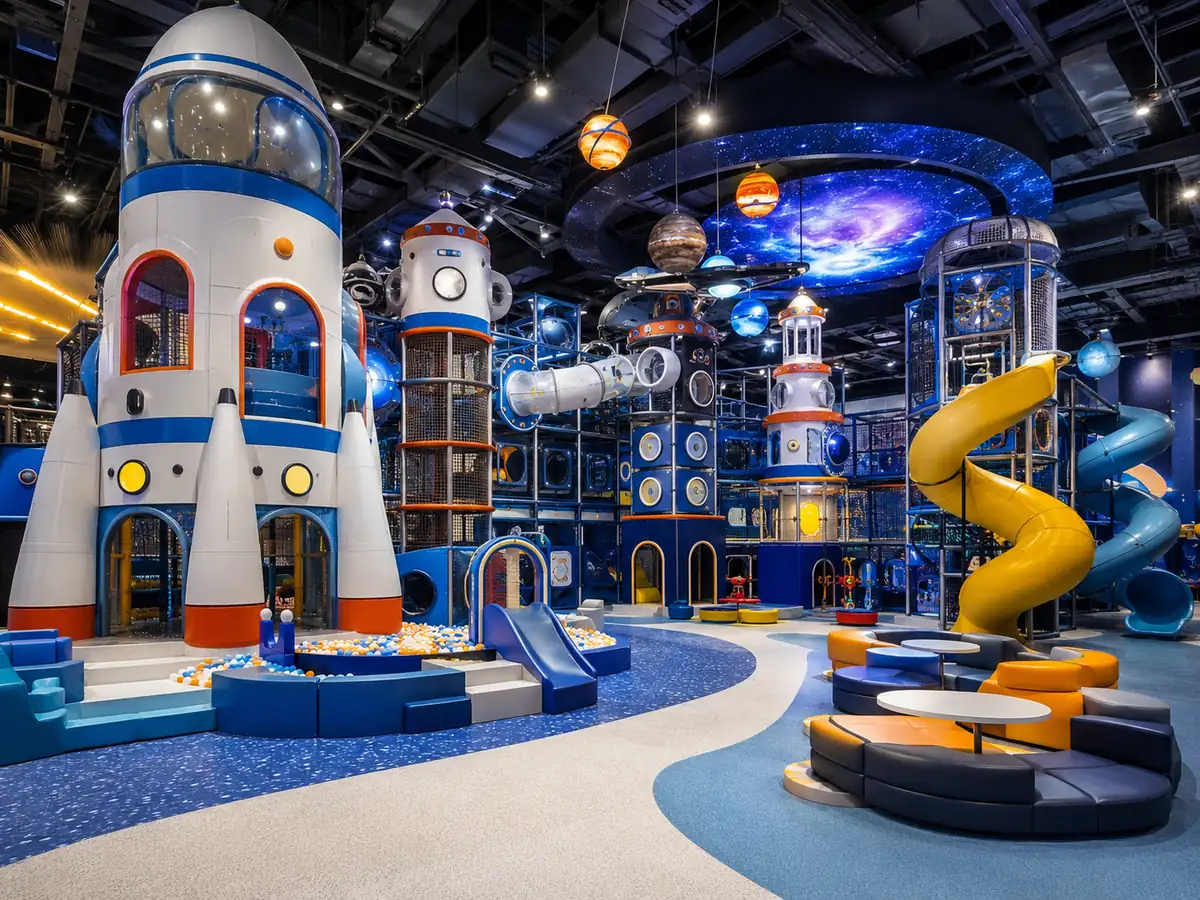
Controlled LED accents can support the theme, but the venue should not become so dark that staff visibility is reduced. Electronic and interactive components should also remain accessible for maintenance.
4. Forest and Nature Theme
Forest and nature themes are suitable for daycare centers, preschools, cafés, hotels and community venues. They often use muted green, beige, light blue and wood-look finishes. Suitable equipment includes low climbing structures, sensory panels, balance elements, crawl tunnels and compact soft play.
Buyers should not assume that wood-look decoration confirms the use of structural timber. Material specifications, padding details and surface finishes should be reviewed separately for each project.
5. Candy and Dessert Theme
Candy and dessert themes are often used in malls, birthday-focused venues and toddler play centers. They can create strong photo appeal through curved slides, pastel ball pools, soft shapes and coordinated party rooms.
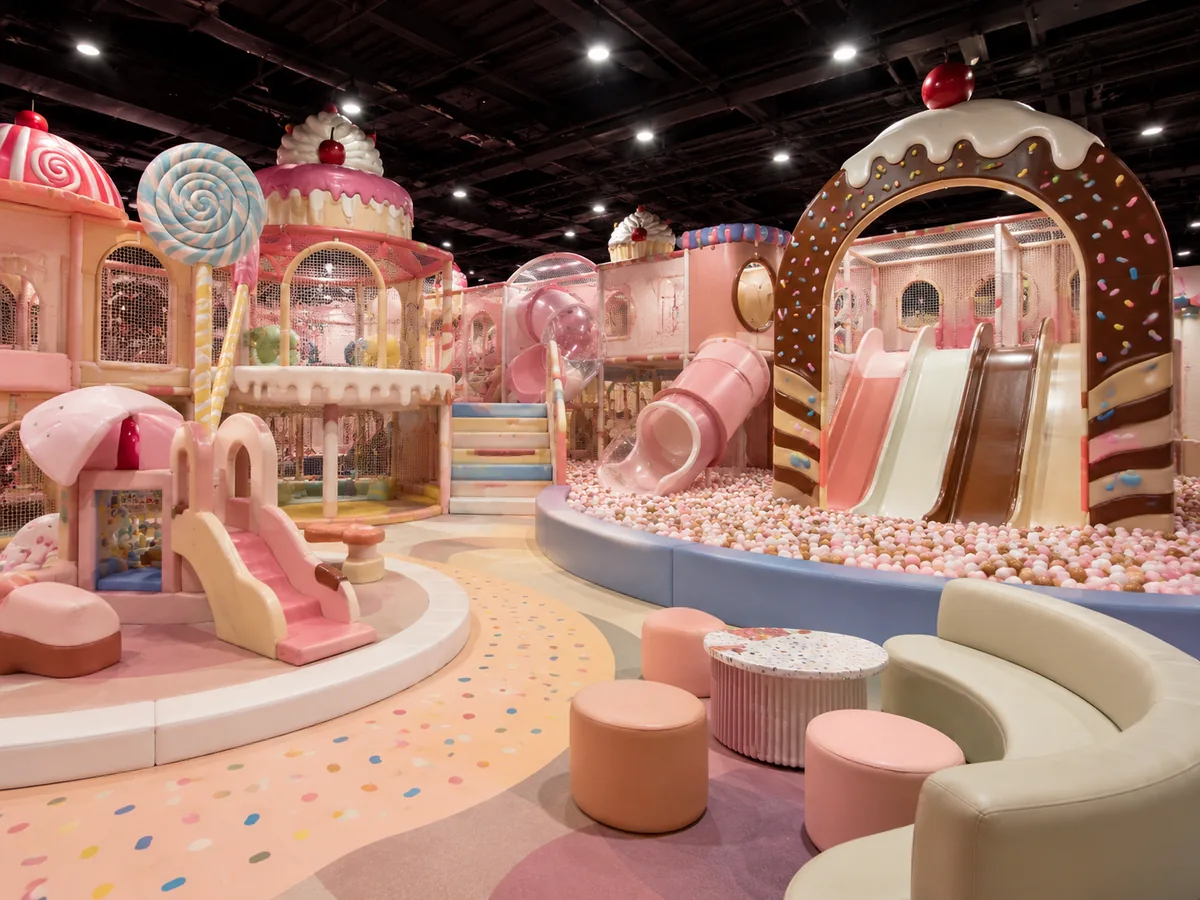
Too many similar pastel colors can reduce contrast between equipment edges and circulation routes. Pale finishes may also show marks more quickly, so cleaning and replacement planning should be discussed before production.
6. City and Role-Play Theme
City and role-play themes are suitable for FECs, malls, preschools and educational play centers. Possible zones include mini supermarkets, clinics, workshops, kitchens, road areas and child-sized vehicles.
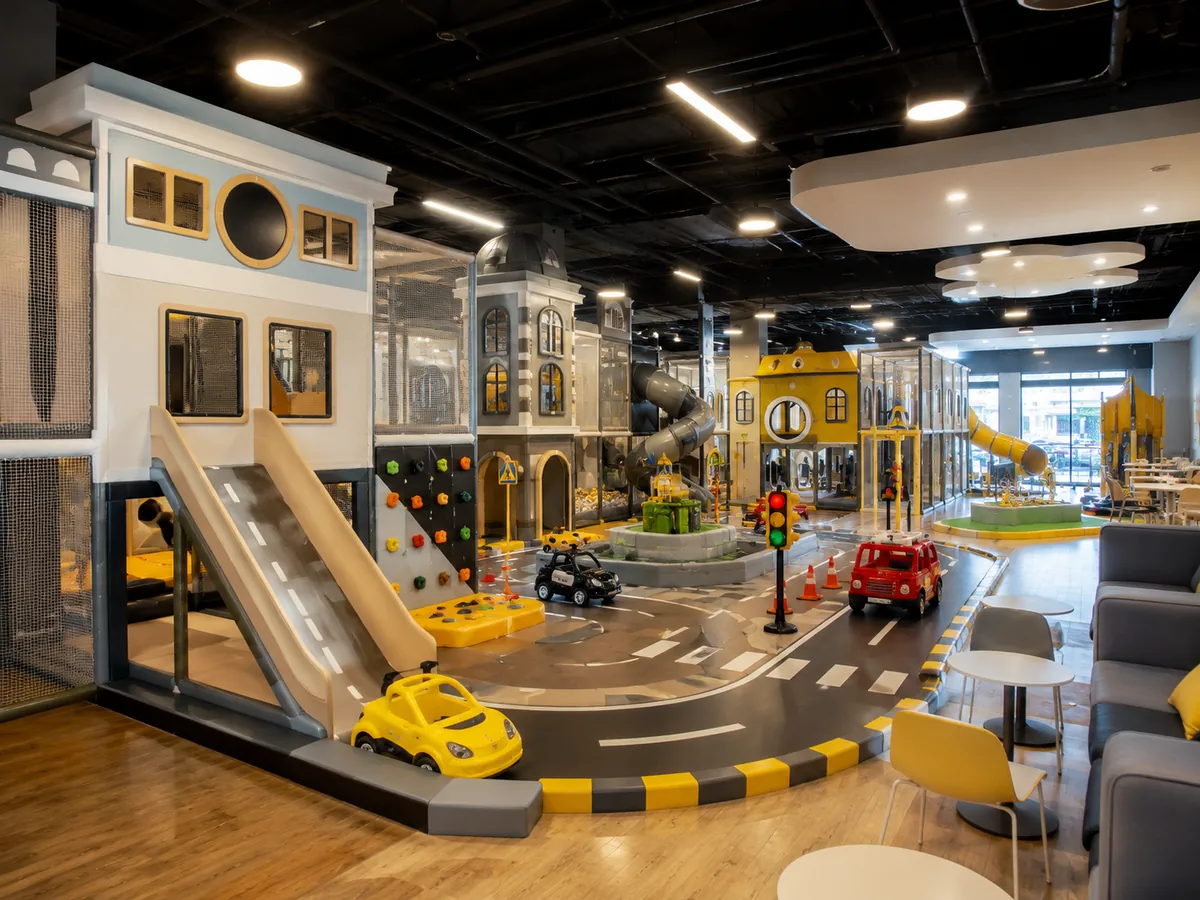
Role-play layouts require more open floor area than wall decoration alone. Small buildings can create blind spots, while props and costumes need storage, cleaning and replacement planning.
7. Construction and Industrial Theme
Construction themes can combine climbing, obstacle play, foam blocks, vehicle elements and imaginative building activities. Yellow, gray and orange can create a strong identity, but decorative tools, bolts and machinery forms must remain child-oriented and should not introduce sharp-looking details or awkward access points.
8. Sports and Challenge Theme
Sports and challenge themes are suitable for family entertainment centers, gyms, trampoline parks and venues targeting older children. The concept may support ninja obstacles, trampoline courts, climbing walls, racing lanes and timed challenges.
High-movement zones should be separated from toddler circulation. Buyers can review indoor trampoline park equipment e percorso ninja options when the project requires active challenge attractions.
9. Castle and Fantasy Theme
Castle and fantasy themes suit malls, resorts, destination playgrounds and party-focused venues. Towers, bridges, slides and role-play spaces can create a strong visual identity, but decorative roofs and façades should not interfere with supervision or maintenance access.
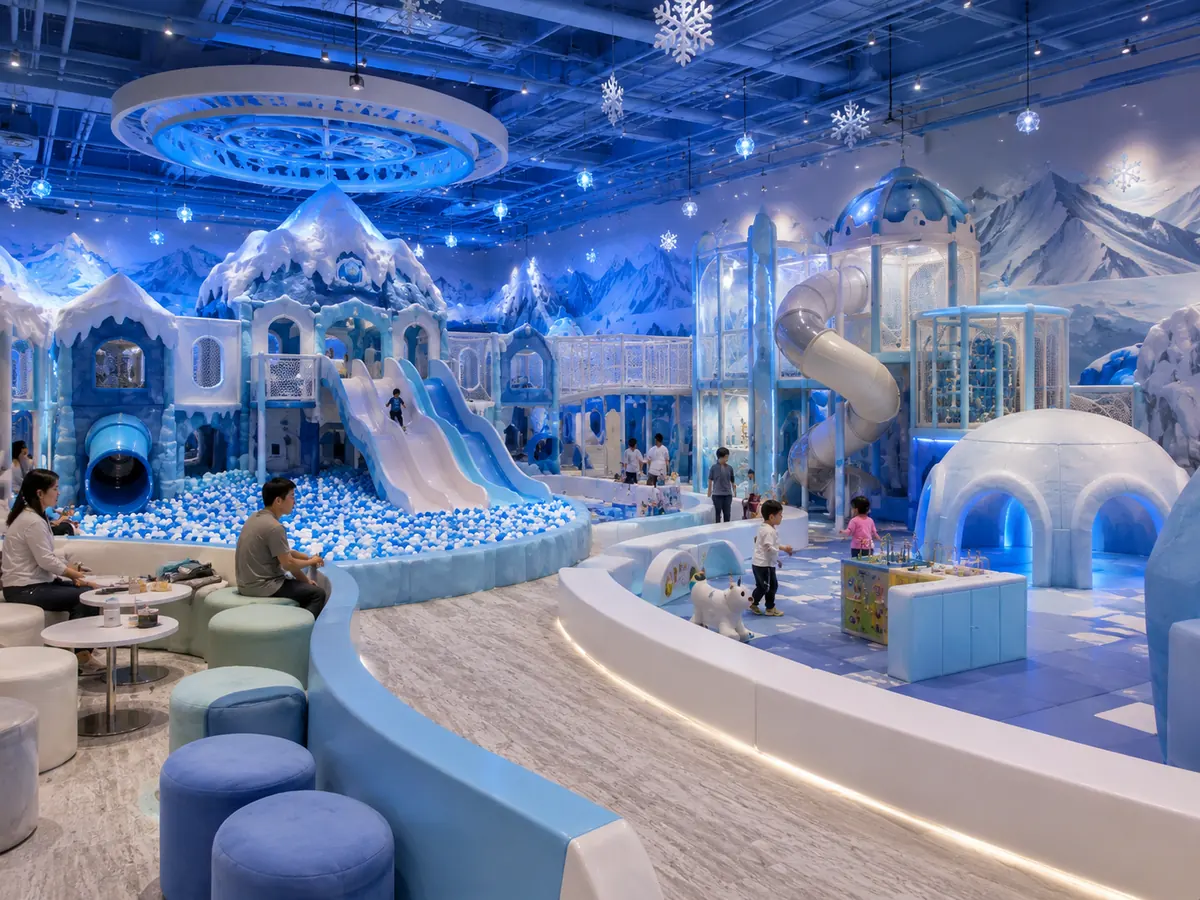
Fantasy themes can include castle, fairy village, dragon, ice kingdom or storybook variations. Original concepts are preferable to unauthorized use of licensed characters.
10. Pastel Toddler Theme
Pastel toddler themes are suitable for daycare centers, preschools, cafés, restaurants and hotel play areas. Typical equipment includes low slides, small ball pools, foam blocks, sensory panels and soft climbing steps.
Soft colors should not eliminate visual contrast. Routes, equipment edges and age zones still need to remain easy to identify. For younger-age projects, attrezzature soft play may be more appropriate than tall adventure structures.
11. Technology and Cyber Theme
Technology and cyber themes can work in FECs, arcade-led venues and older-child entertainment centers. Interactive walls, projection games, trampoline courts and ninja attractions may share a coordinated visual system.
Lighting effects should not replace clear circulation. Electronic components need suitable service access, and their maintenance requirements should be confirmed before the final design is approved.
12. Local Culture or Landmark Theme
Local culture and landmark themes can suit tourism destinations, airports, resorts, landmark malls and municipal venues. Inspiration may come from local architecture, landscapes, animals, transportation or regional stories.
The concept should be original. Buyers should avoid unauthorized use of protected characters, logos, brand assets or culturally sensitive symbols without appropriate review.
Originality, Trademarks and Licensed-Character Boundaries
Commercial playground graphics, characters, logos, sculpted façades and branded story elements can involve copyright, trademark, design and contractual rights. A reference image found online is not automatically cleared for manufacture or commercial installation.
Before approving a recognizable character, logo or branded environment, identify the rights owner, permitted territory, approved uses, approval workflow, production files and duration of the license. For U.S.-focused background, buyers can review the U.S. Copyright Office permission guidance and the USPTO overview of trademark infringement. Rights and exceptions differ by country, so project-specific legal review may be required.
| Theme Asset | Buyer Confirmation | Project Record to Keep |
|---|---|---|
| Original supplier-created concept | Who owns the final artwork and production files? | Design-ownership and permitted-use terms |
| Client logo or mascot | Does the client have the right to authorize this use? | Written brand authorization and approved artwork |
| Licensed character or entertainment property | Does the license cover venue design, manufacturing, territory and duration? | License agreement and approval correspondence |
| Local landmark or cultural symbol | Are there permissions, cultural-review or public-asset restrictions? | Local review notes and source references |
| Online inspiration image | Is it only a mood reference, or is the design being copied? | Original concept brief and design-development record |
Match the Theme to the Venue Type
| Tipo di locale | Recommended Theme Direction | Approaches to Use Carefully |
|---|---|---|
| Centro commerciale | Jungle, ocean, castle, candy, local landmark | Very dark themes that reduce visibility |
| Centro di intrattenimento familiare | Space, sports, jungle, cyber, city role-play | One decorative theme with no attraction zoning |
| Daycare or Preschool | Forest, pastel toddler, city role-play | Tall or visually intense concepts |
| Café or Restaurant | Pastel, forest, compact ocean | Large high-energy attraction concepts |
| Hotel or Resort | Ocean, forest, jungle, local culture | Themes disconnected from the property identity |
| Trampoline or Adventure Venue | Sport, cyber, spazio, costruzioni | Toddler styling across the entire venue |
| Community or Church Venue | Forest, city, construction, sports | Complex electronic themes with high maintenance needs |
Theme Selection by Usable Area and Clear Height
Under 100㎡
Use one clear visual system, limited decorative depth and open supervision. Confirm that the stated area is usable operating area after reception, seating, storage, circulation and required routes are removed.
100–300㎡
This range may support one main theme with two or three coordinated sub-zones. Reception, shoe storage, parent seating and the play structure should share one visual language without consuming the equipment boundary.
300–800㎡
A larger commercial playground can use one overall theme with attraction-specific variations. Toddler, contained-play, party and optional challenge zones can share a visual system while retaining separate operating and maintenance requirements.
1000 mq+
A large FEC may need a complete brand system covering entrance, reception, main attractions, café, party rooms, signage, wayfinding and phased expansion. The concept should be developed against a coordinated master layout rather than an area total alone.
Theme Design and Equipment Must Be Planned Together
A jungle theme may support bridges and climbing nets. A city theme may require open role-play space. A sports theme may prioritize linear challenge routes. A toddler theme needs low equipment and simple supervision. Decoration should not be added after the equipment layout is finished without reviewing access, circulation and visibility.
Theme Approval Checklist
- Does the theme fit the target age group?
- Does it support the selected equipment mix?
- Can staff supervise the main play zones?
- Can the theme extend into reception and party rooms?
- Can decorative components be replaced independently?
- Does the concept allow future expansion?
- Are maintenance routes accessible?
- Are local safety, building, fire and accessibility requirements being reviewed separately?
Equipment-to-Theme Compatibility Matrix
| Categoria attrezzatura | Theme Directions That Commonly Fit | Planning Requirement |
|---|---|---|
| Low soft play and toddler equipment | Pastel, forest, ocean, farm or simple animal concepts | Open visibility, simple routes and easy-clean surfaces |
| Multi-level soft-contained play | Jungle, castle, ocean, space and construction | Coordinate tower shapes, bridge routes and slide locations with the story |
| Role-play town | City, local culture, transport or community themes | Allow open streets, storage, prop control and staff observation |
| Trampoline courts | Sports, cyber, space and industrial concepts | Keep graphics and lighting secondary to court boundaries and supervision |
| Ninja or obstacle course | Sports, space, jungle and construction | Plan progressive challenge routes, access and maintenance clearance |
| Party rooms | Candy, fantasy, ocean, jungle and brand-color concepts | Connect the room visually to the venue while separating service and play flow |
From Theme Inspiration to an Approved Production Scope
A mood board, 3D rendering and production package serve different purposes. Buyers should control the transition from inspiration to manufacture so the approved visual concept matches the equipment schedule, dimensions, materials and quotation.
Budget and Maintenance Factors
Theme complexity can affect concept development, production, packing, shipping, installation and future maintenance. Buyers should compare proposals by component type rather than evaluating only the total visual impact.
| Cost or Maintenance Driver | Perché è importante | Question for the Supplier |
|---|---|---|
| Custom sculpted façades | May increase design work, packing volume and installation coordination | Which pieces are modular and replaceable? |
| Custom upholstery and colors | Affects material sourcing and future color matching | Can replacement covers or color references be supplied later? |
| Printed graphics and panels | High-contact areas may need periodic replacement | Which graphics are removable without dismantling the main structure? |
| Lighting and interactive systems | Require power planning, service access and component replacement | What electrical information and maintenance access are required? |
| Role-play props | Small movable items need storage, cleaning and replenishment | Which props are included and which are locally sourced? |
| Large entrance features | May affect shipping volume, storefront clearance and assembly | How is the feature packed, supported and installed? |
| Party-room decoration | Adds visual consistency but may involve different wall, furniture and service requirements | Is the party-room scope included in the playground proposal? |
Il prezzo finale dipende da dimensioni, design, materiali, destinazione di spedizione e requisiti di installazione. Lead time, warranty scope and replacement-part arrangements should be confirmed project by project.
A complex theme is not automatically more effective. A simpler, consistent theme with replaceable components may be more practical than many unrelated decorative elements.
Materials, Safety and Accessibility Boundaries
A visual theme does not confirm that the completed venue meets local safety, building, fire or accessibility requirements. The equipment layout, structural details, impact-attenuating surfaces, padding, access routes, exits, electrical work and installation method must be reviewed separately.
Compliance requirements vary by country and project. Buyers should confirm applicable local regulations, insurer requirements, landlord rules, fire and building requirements, accessibility obligations and inspection procedures before installation.
Material Documentation
Ask which materials are used for structural frames, platforms, padding, covers, panels, printed graphics and decorative components. Supporting documentation should be requested according to the destination market and project scope.
Visibility and Supervision
Decorative walls, towers, roofs and role-play rooms should not create unnecessary blind spots. Staff positions and parent seating should be considered during layout review.
Accessibility and Circulation
Entrance routes, customer circulation, seating, activity access and service areas should be reviewed against applicable local accessibility requirements.
Electrical and Fire Coordination
Lighting, projection and interactive systems require site-specific electrical planning. Fire exits, ceiling systems, sprinklers and local building requirements should be coordinated with qualified local parties.
Standards and Local Requirements
Theme selection does not establish compliance. The applicable equipment, accessibility, building, fire, electrical, insurer and inspection requirements depend on the destination market, venue and attraction scope.
- ASTM F1918-21 is the current active ASTM safety-performance specification for soft-contained play equipment. Its published scope covers users from the 5th-percentile two-year-old through the 95th-percentile twelve-year-old, excludes public playground equipment and does not independently address general accessibility.
- ASTM F2970-25 applies to commercial or institutional trampoline courts and addresses design, manufacture, installation, operation, maintenance, inspection and major modification. Use it only when trampoline-court zones are included.
- U.S. Access Board — Chapter 10: Play Areas provides U.S.-focused guidance for accessible routes and play components in covered play areas. Applicability should be confirmed for the actual facility and project scope.
- Manuale di sicurezza per parchi giochi pubblici della CPSC (USA) is a public-playground safety resource. It should be used within its stated scope and is not proof that a soft-contained indoor play system or themed venue is certified or locally approved.
These references are buyer-education resources, not a universal approval path. Confirm current requirements with the authority, landlord, insurer, accessibility consultant and other qualified local parties before installation.
Shipping and Installation Considerations for Themed Components
Highly themed projects may contain irregular façades, shaped panels, lighting elements and large entrance pieces. These components can affect packing volume, container planning, site access and installation sequencing.
Confirm Before Production
- Maximum door, corridor, elevator and loading-bay dimensions
- Whether large decorative pieces are shipped assembled or in modules
- Required lifting equipment and site storage area
- Local electrical work for lighting or interactive elements
- Who supplies anchors, fasteners and site-specific building interfaces
- Installation drawings, labels, manuals and remote support availability
- Which finishes must be protected until construction work is complete
Installation requirements depend on site conditions. Shipping, unloading, assembly responsibilities and local contractor scope should be clarified in the quotation and project schedule.
Common Theme Selection Mistakes
- Choosing a theme before confirming the floor plan.
- Copying another venue too closely.
- Using too many themes in one small space.
- Ignoring the target age group.
- Making the venue too dark.
- Blocking supervision sightlines.
- Treating wall graphics as a complete theme.
- Forgetting parent, reception and party areas.
- Ignoring maintenance and replacement access.
- Assuming a rendering proves local compliance.
- Using licensed characters without authorization.
- Designing only for social-media appearance instead of operational flow.
Questions to Ask a Themed Playground Supplier
A visually strong rendering is only one part of supplier evaluation. Buyers should also confirm how the concept will be translated into producible, packable, installable and maintainable components. Use the indoor playground supplier evaluation guide to review company evidence, quote scope and responsibility boundaries.
| Domanda al fornitore | Perché è importante | Evidence or Clarification to Request |
|---|---|---|
| Which parts are standard equipment and which are custom themed parts? | Clarifies design complexity and replacement needs | Component list or marked design drawing |
| How are sightlines and age zones reviewed? | Reduces operational blind spots and mixed-age conflicts | Zoning plan and key supervision points |
| Which materials and finishes are proposed? | Supports cleaning, maintenance and project documentation review | Project-specific material schedule |
| How are large decorative pieces packed and installed? | Affects shipping volume and site access | Packing concept and installation sequence |
| Can damaged graphics, covers or decorative pieces be replaced separately? | Reduces the need to remake a full themed area | Replacement-part policy and file-retention process |
| What project information is required before quotation? | Shows whether the proposal is based on the actual venue | Floor-plan and RFQ checklist |
| What installation and after-sales support is available? | Clarifies responsibility after shipment | Scope statement, manuals and communication process |
What to Send Before Requesting a Theme Design
- Floor plan with dimensions
- Altezza del soffitto
- Posizioni delle colonne
- Door and exit locations
- Venue photos or video
- Venue type and target age group
- Mix di attrezzature preferito
- Theme references and brand colors
- Reception, seating and party-room requirements
- Destination country
- Expected opening timeline
- Budget range, when available
Prepare the project brief with Playtime’s strumenti di pianificazione and use the indoor playground RFQ checklist so every candidate supplier receives the same site, equipment, documentation and logistics inputs.
How Playtime Supports Themed Playground Projects
Playtime can support the main project stages according to the confirmed scope. The process should begin with venue information and equipment priorities rather than a theme image alone.
Material details, project documentation, delivery arrangements, lead time, warranty and installation support should be confirmed for each project. Buyers can review Playtime’s servizi per progetti di parchi gioco, project examples e company information before requesting a custom proposal.
Evidence to Request During Supplier Evaluation
Before approving a formal proposal, request project-specific evidence relevant to the selected equipment, theme complexity and destination market.
- Relevant completed-project images or drawings, clearly identified as real projects rather than concept renderings
- A project-specific material and finish schedule
- Marked layout drawings showing age zones, circulation and principal supervision points
- Packing, component-identification and installation documentation appropriate to the agreed scope
- Clarification of replacement parts, retained design files and after-sales communication
- Any test reports, certificates or declarations specifically applicable to the proposed products and destination requirements
Send Your Floor Plan for a Venue-Specific Theme Review
Send the dimensioned floor plan, clear height, columns, target age group, required attractions, destination country, brand colors and theme references. The first review can identify theme-fit risks and the information still required before a formal layout and quotation.
Frequently Asked Questions
Qual è il tema più adatto per un parco giochi indoor in un centro commerciale?
Non esiste un tema unico che si adatti a ogni centro commerciale. Concetti come giungla, oceano, castello, caramelle e monumenti locali possono funzionare, ma la decisione dovrebbe basarsi sull'età del target, sull'area utilizzabile, sulla visibilità delle vetrine, sul mix di attrezzature, sulla gestione delle code, sulla supervisione e sul posizionamento del centro commerciale.
Quali temi per parchi gioco funzionano bene per i bambini piccoli?
Concetti come pastello, foresta, oceano compatto e animale semplice possono adattarsi alle aree per bambini piccoli. Il layout dovrebbe dare priorità a attrezzature basse, linee visive aperte, contrasto visivo, superfici morbide, facile pulizia e movimento semplice.
Un parco giochi indoor può utilizzare più di un tema?
Sì, in particolare in una location più grande, ma i sottotemi dovrebbero utilizzare un sistema visivo coordinato. Le location più piccole solitamente funzionano meglio con un unico concetto chiaro perché temi non correlati possono far sembrare lo spazio affollato e complicare la pianificazione delle sostituzioni.
Il tema dovrebbe essere scelto prima della disposizione delle attrezzature?
Una direzione tematica generale può essere selezionata in anticipo, ma il concetto finale e la disposizione delle attrezzature dovrebbero essere sviluppati insieme. L'approvazione di facciate o grafiche dettagliate prima della conferma della planimetria rilevata, dell'altezza libera e della lista delle attrezzature può causare riprogettazioni.
I temi personalizzati per parchi gioco sono più costosi dei temi standard?
Possono richiedere ulteriore lavoro concettuale, colori personalizzati, facciate scolpite, pannelli stampati, illuminazione, controllo artistico, volumi di imballaggio maggiori o maggiore coordinamento dell'installazione. L'effetto commerciale dipende dall'elenco esatto dei componenti personalizzati, non semplicemente dal nome del tema.
Un tema può includere attrazioni con trampolino o ninja?
Sì. Concetti sportivi, cyber, spaziali, di costruzione e avventura possono coordinarsi con attrazioni trampolino o ninja. Queste zone ad alta energia dovrebbero essere separate dalla circolazione dei bambini piccoli e considerate come attrezzature, supervisione, manutenzione e standard distinti.
Un parco giochi commerciale può utilizzare personaggi famosi dei cartoni animati o loghi di marchi?
Solo quando l'acquirente e il team di progetto dispongono dei diritti o delle autorizzazioni necessarie. Le immagini di riferimento online non forniscono automaticamente il permesso per la produzione o l'installazione commerciale. Confermare la proprietà, il territorio, gli usi consentiti, il flusso di approvazione e la durata della licenza.
Come dovrebbero gli acquirenti confrontare due proposte di parco giochi a tema?
Confronta il mix di attrezzature utilizzabili, la zonizzazione per età, la visibilità della supervisione, l'elenco dei componenti personalizzati, i materiali e le finiture, la proprietà dei file di progettazione, il volume di imballaggio, le responsabilità di installazione, la strategia di sostituzione e le esclusioni dal preventivo. Un rendering più dettagliato non è automaticamente la proposta più pratica.