





Costo parco giochi indoor per dimensione
Costo parco giochi indoor per dimensioni: 50 mq, 100 mq, 300 mq e 500 mq
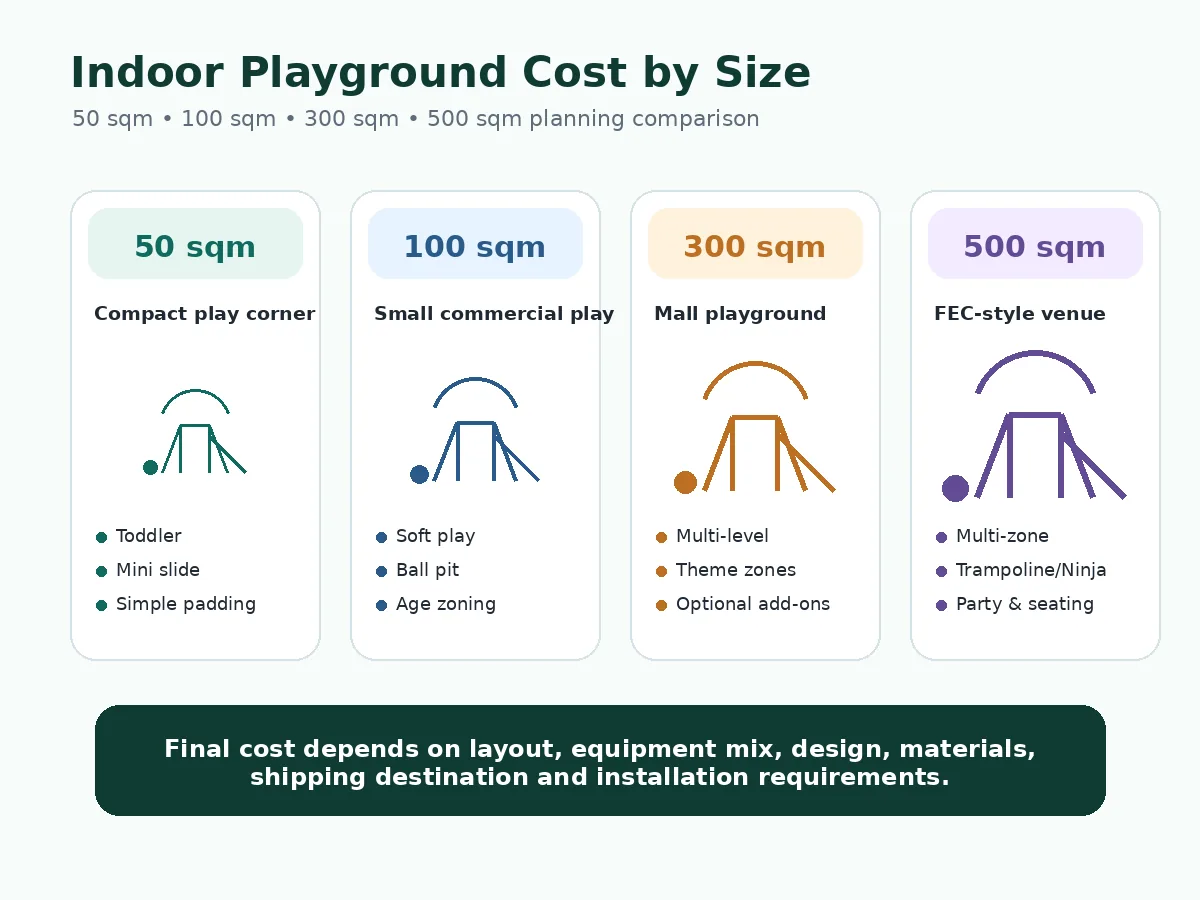
Il costo di un parco giochi indoor non può essere calcolato solo dalla superficie. Un progetto di 50 mq (circa 538 piedi quadrati) è solitamente un angolo gioco compatto; 100 mq (circa 1.076 piedi quadrati) possono supportare una piccola area soft-play; 300 mq (circa 3.229 piedi quadrati) consentono una zonizzazione commerciale più chiara; e 500 mq (circa 5.382 piedi quadrati) possono supportare un concetto multi-zona. Queste sono fasi di pianificazione, non fasce di prezzo fisse. I preventivi finali dipendono ancora dall'area attrezzata utilizzabile, dall'altezza del soffitto, dalla combinazione di attrezzature, dal livello di progettazione, dalla destinazione, dall'ambito del trasporto e dalla responsabilità dell'installazione.
Cosa fa questa pagina: confronta le domande di pianificazione e preventivo che cambiano in quattro dimensioni di locale. Per una ripartizione completa dei costi delle attrezzature, dei costi di sbarco e dei costi di apertura lato proprietario, utilizzare la guida completa ai costi delle attrezzature per parchi giochi indoor.
Perché il costo di un parco giochi indoor per metro quadro non è una formula fissa
I metri quadrati sono utili per classificare un progetto in una fase iniziale di pianificazione, ma non definiscono il prezzo finale dell'attrezzatura. Commerciale Attrezzature per parco giochi indoor deve adattarsi alla forma effettiva del locale, all'altezza libera del soffitto, alle colonne, agli ingressi, alle uscite, alle zone per età, al piano di supervisione e al modello operativo.
La prima distinzione è tra area totale del locale e area utilizzabile per le attrezzature. Reception, deposito scarpe, posti a sedere per genitori, sale feste, aree di circolazione, spazio per il personale, colonne strutturali, vie di fuga e altre aree ristrette possono ridurre l'ingombro disponibile per le attrezzature da gioco. Un preventivo basato solo sull'area in affitto può quindi sovrastimare l'ambito delle attrezzature, il volume di imballaggio e il requisito di installazione.
Un problema comune nella pianificazione si verifica quando un acquirente descrive un locale come “300 mq”, mentre parte di quello spazio è già destinato a reception, posti a sedere e circolazione. Il problema non è l'area dichiarata in sé; è che fornitori diversi possono fare supposizioni diverse su quanto di essa sia effettivamente disponibile per le attrezzature. Il metodo di prevenzione è semplice: contrassegnare il perimetro di gioco utilizzabile sulla planimetria e chiedere a ogni fornitore di fare un preventivo basato sullo stesso perimetro.
Due progetti con la stessa area utilizzabile possono comunque avere budget diversi. Un layout soft-play compatto con zona per bambini piccoli e un piccolo scivolo ha una struttura diversa da un layout a più livelli a tema con scivoli più grandi, piscine di palline, componenti interattivi o zone di sfida attiva. La dimensione avvia la discussione; l'attrezzatura confermata e l'ambito di responsabilità completano il preventivo.
Perché il costo al metro quadro può essere fuorviante
Il costo al metro quadro è comparabile solo quando le condizioni della planimetria, la combinazione di attrezzature, il livello di progettazione, l'ambito dei materiali, la base di trasporto e le responsabilità di installazione sono ampiamente simili. Quando uno di questi fattori cambia, il tasso unitario smette di essere una metrica di acquisto affidabile.
Stessa dimensione, mix di attrezzature diverso
Un locale focalizzato sul soft play ha solitamente una struttura di costi diversa da un locale con attrazioni miste contenente campi da trampolino, percorsi ninja, giochi elettronici o strutture a tema fortemente personalizzate. Il secondo ambito può richiedere una zonizzazione separata, imbottiture aggiuntive, strutture diverse, maggiore coordinamento della progettazione e un volume di imballaggio maggiore.
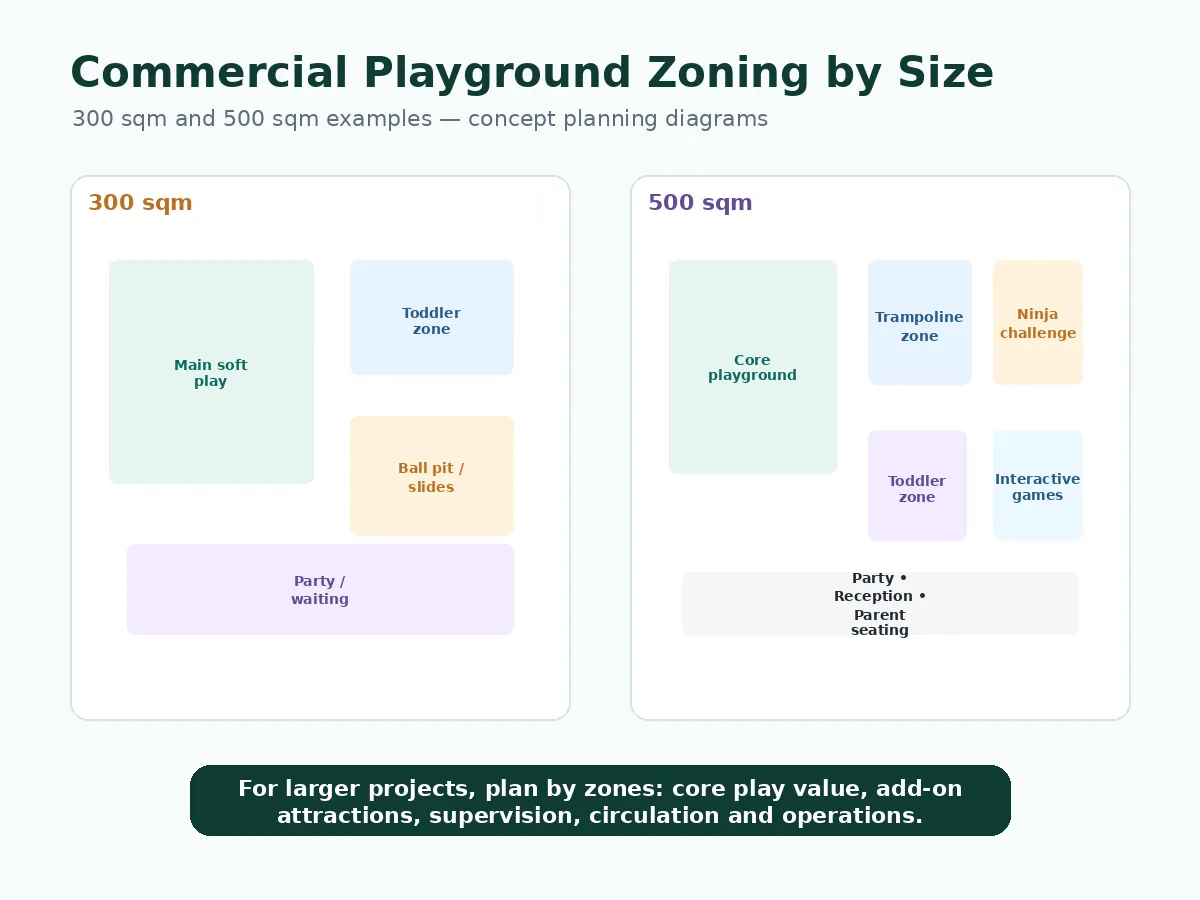
For example, one 300 sqm concept may reserve most of the usable area for a multi-level soft-play structure, toddler zone, ball pit and slides. Another 300 sqm concept may divide the same footprint among soft play, trampoline, ninja and interactive zones. The second concept is not automatically “better”; it simply creates a different quotation and operating model.
Stessa area, diverse condizioni del sito
Uno spazio rettangolare pulito e uno spazio irregolare con colonne possono produrre layout molto diversi anche quando le loro aree a pavimento corrispondono. Travi del soffitto, condotti HVAC, uscite di emergenza, vetrate, aperture delle porte, percorsi del personale e linee di vista dei genitori possono ridurre la densità delle attrezzature o richiedere componenti personalizzati.
Un tipico conflitto di layout appare quando viene selezionato uno scivolo o un percorso di arrampicata di alto valore prima che sia confermata l'altezza libera netta. Se una trave, un condotto o una zona sprinkler limitano successivamente il design, la struttura potrebbe dover essere abbassata o ridisegnata. La conferma della planimetria e dell'altezza libera prima della progettazione dettagliata riduce questa rilavorazione.
Perché i fornitori necessitano di una planimetria prima di un preventivo accurato
Un fornitore può discutere una direzione approssimativa basandosi solo sull'area, ma un preventivo utile necessita della planimetria, dell'altezza libera del soffitto, delle colonne, degli ingressi, delle uscite, delle zone ristrette, del gruppo di età target e del mix di attrezzature preferito. Gli acquirenti che stanno ancora pianificando lo spazio possono confrontare esempi pratici di zonizzazione nella guida al layout dei parchi giochi indoor per metro quadro.
di Playtime. Quale livello di budget stai confrontando?
Un'etichetta di dimensione è particolarmente fuorviante quando due preventivi si riferiscono a diversi livelli di budget. Prima di confrontare un numero di 50 mq, 100 mq, 300 mq o 500 mq, identifica se si tratta di un preventivo per le attrezzature, una stima delle attrezzature sdoganate o un budget completo per l'apertura.
| Livello di budget | Di solito copre | Articoli che potrebbero essere ancora esclusi dal numero |
|---|---|---|
| Preventivo attrezzature | Strutture di gioco confermate, componenti elencati, ambito di progettazione concordato e imballaggio per l'esportazione quando specificato | Trasporto, dogane, dazi, consegna interna, scarico, manodopera locale, lavori sul sito e approvazioni, se non specificamente inclusi |
| Stima delle attrezzature sdoganate | Attrezzature più il trasporto concordato e la base di consegna | Manodopera locale per l'installazione, pavimentazione, lavori elettrici, modifiche relative al fuoco, permessi, assicurazione e costi operativi pre-apertura |
| Budget completo del progetto o di apertura | Attrezzature sdoganate più allestimento lato proprietario, lavori locali, installazione, approvazioni e preparazione operativa | Affitto continuativo, stipendi, marketing, utenze, manutenzione e altri costi operativi, a meno che il business plan non li includa |
Un errore di preventivo si verifica quando un acquirente confronta un numero di fabbrica solo per le attrezzature con il numero di un altro fornitore comprensivo di trasporto o supporto all'installazione. I totali appaiono molto diversi anche se l'ambito effettivo delle attrezzature potrebbe essere simile. Chiedi a ciascun fornitore di contrassegnare ogni articolo principale come incluso, opzionale o escluso.
Confronto rapido: 50 mq vs 100 mq vs 300 mq vs 500 mq
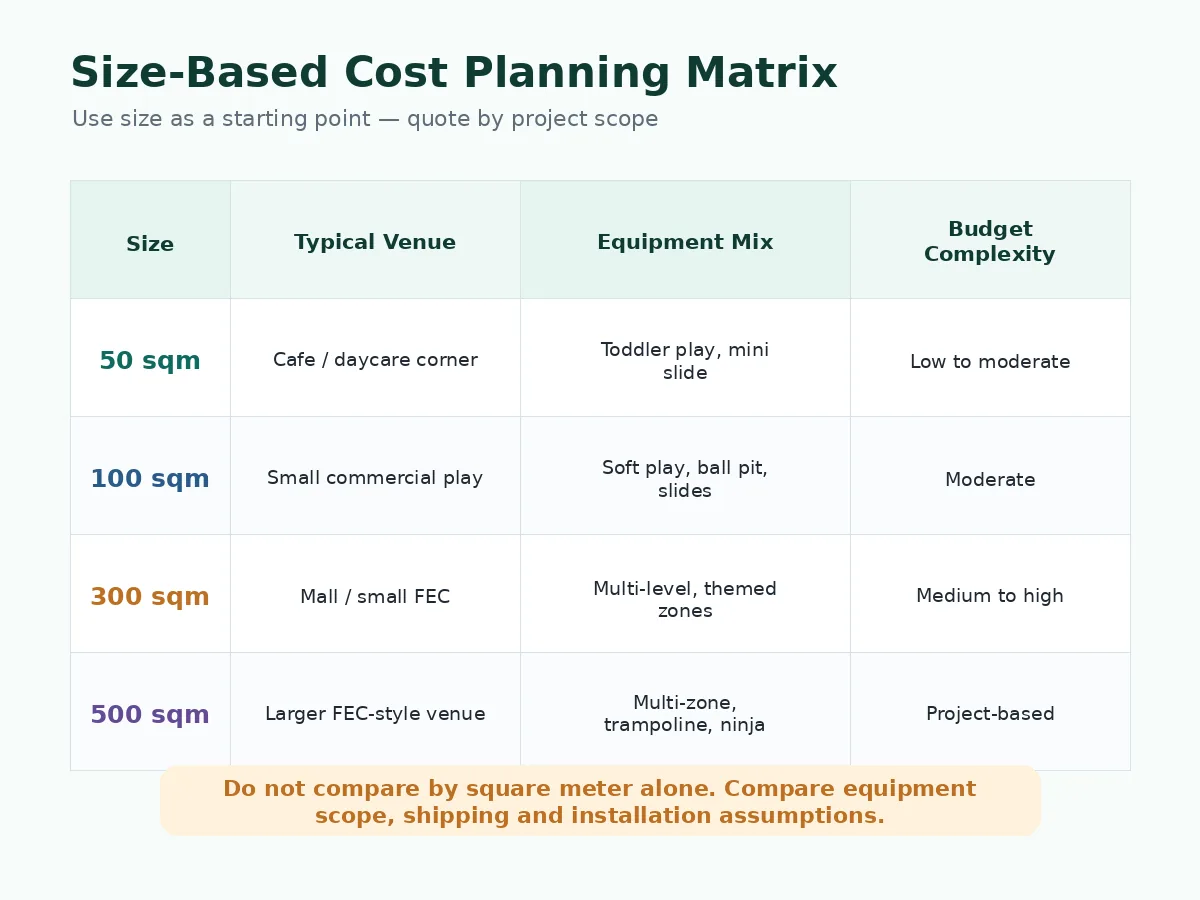
Il confronto seguente mostra come cambiano le domande di pianificazione all'aumentare dell'area disponibile. È una guida allo sviluppo dell'ambito, non una regola di capacità, un listino prezzi o una promessa che ogni attrazione elencata si adatti.
| Dimensioni di pianificazione | Direzione comune del locale | Ambito di gioco indicativo | Metodo di budget migliore | Rischio principale da controllare |
|---|---|---|---|---|
| 50 mq circa 50 mq | Angolo gioco per bar, ristoranti, asili nido, hotel o comunità | Zona soft play o per bambini piccoli focalizzata con scivolo compatto, ostacoli morbidi e supervisione semplice | Preventivo per l'elenco esatto delle attrezzature compatte e base di trasporto | Riempire eccessivamente la stanza o presumere che l'intera area sia utilizzabile |
| 100 mq circa 100 mq | Piccolo parco giochi commerciale, asilo nido, scuola dell'infanzia o angolo in un centro commerciale | Struttura soft play principale, separazione per bambini piccoli, piscina di palline e piccoli scivoli dove il layout lo consente | Confronto tra l'ambito delle attrezzature basato sulla planimetria e il livello di progettazione | Utilizzo di troppi gruppi di età o attrazioni non correlate in un unico piccolo spazio |
| 300 mq circa 300 mq | Parco giochi in centro commerciale, spazio comunitario o piccolo parco giochi indoor | Soft play multi-zona con componenti aggiuntivi selezionati e pianificazione dello spazio di servizio | Dividere il budget in attrazioni principali, zone opzionali e lavori a carico del proprietario | Confronto di preventivi per attrazioni miste che includono zone diverse |
| 500 mq circa 499 mq | Concetto di parco giochi commerciale più grande o stile FEC | Molteplici zone per età e attività, più possibili funzioni per feste, genitori e reception | Utilizzare un budget zona per zona e una matrice di responsabilità del progetto | Utilizzare l'intera area per le attrezzature ignorando la circolazione e l'operatività |
Quale dimensione si adatta al tuo tipo di locale?
Lo scopo del locale dovrebbe determinare come viene utilizzata l'area. Un angolo di gioco libero a supporto di un bar, una sala attività per asili nido, un parco giochi a pagamento e un centro di intrattenimento familiare possono richiedere aree di servizio e attrezzature diverse anche quando la superficie lorda è simile.
Gli intervalli seguenti sono solo riferimenti per la pianificazione preliminare. Non stabiliscono la capacità, la conformità alle normative o l'idoneità finale delle attrezzature. Il team di progetto dovrà comunque confermare l'area di gioco utilizzabile, la circolazione, la supervisione, l'altezza libera, gli ingressi, le uscite e i requisiti locali.
| Tipo di locale | Intervallo comune per la pianificazione preliminare | Priorità di pianificazione principale | Rischio di budget comune |
|---|---|---|---|
| Caffetteria, ristorante o area d'attesa | Circa 50–100 mq (538–1.076 piedi quadrati) | Valore ludico compatto, visibilità per i genitori, ingresso controllato e pulizia semplice | Utilizzo di una densità di attrezzature che blocca la vista dei posti a sedere o i percorsi del personale |
| Asilo nido o sala giochi per scuola dell'infanzia | Circa 50–100 mq o più | Movimento appropriato all'età, attività a bassa altezza, supervisione e routine igieniche | Ignorare la separazione per età, le condizioni delle pareti o l'uso didattico normale della stanza |
| Parco giochi per centri commerciali | Circa 100–300 mq o più | Visibilità dell'ingresso, circolazione commerciale, attesa dei genitori e vincoli di allestimento del proprietario | Approvazione del tema e delle attrezzature prima di confermare le restrizioni del centro commerciale |
| Centro giochi indoor indipendente | Circa 300–500 mq o più | Pianificazione zone, valore di ripetizione del gioco, reception, posti a sedere e accesso alla manutenzione | Utilizzo di una cifra totale per le attrezzature anziché un controllo dell'ambito basato sulle zone |
| Locale in stile FEC | Spesso 500 mq e oltre, a seconda del mix di attrazioni | Separazione dei livelli di energia, aree di attesa, percorsi del personale, funzioni per feste e controllo operativo | Aggiunta di più attrazioni senza spazio sufficiente o logica di gestione del personale |
Pianificazione dei costi per parco giochi indoor di 50 mq
Un parco giochi indoor di 50 mq, circa 538 piedi quadrati, viene solitamente pianificato come un angolo gioco mirato piuttosto che una struttura completa con più attrazioni. L'obiettivo commerciale deve essere definito prima della selezione delle attrezzature: supportare un bar o ristorante, servire una sala asilo, migliorare un'area familiare di un hotel o funzionare come un'attività a pagamento molto compatta.
Tipi di locali adatti per 50 mq
- Bar e ristoranti
- Sale asilo nido o scuole dell'infanzia
- Sale per chiese e comunità
- Aree familiari di hotel
- Aree di attesa in negozi o servizi
- Spazi compatti per attività per bambini
Direzione attrezzature consigliata per 50 mq
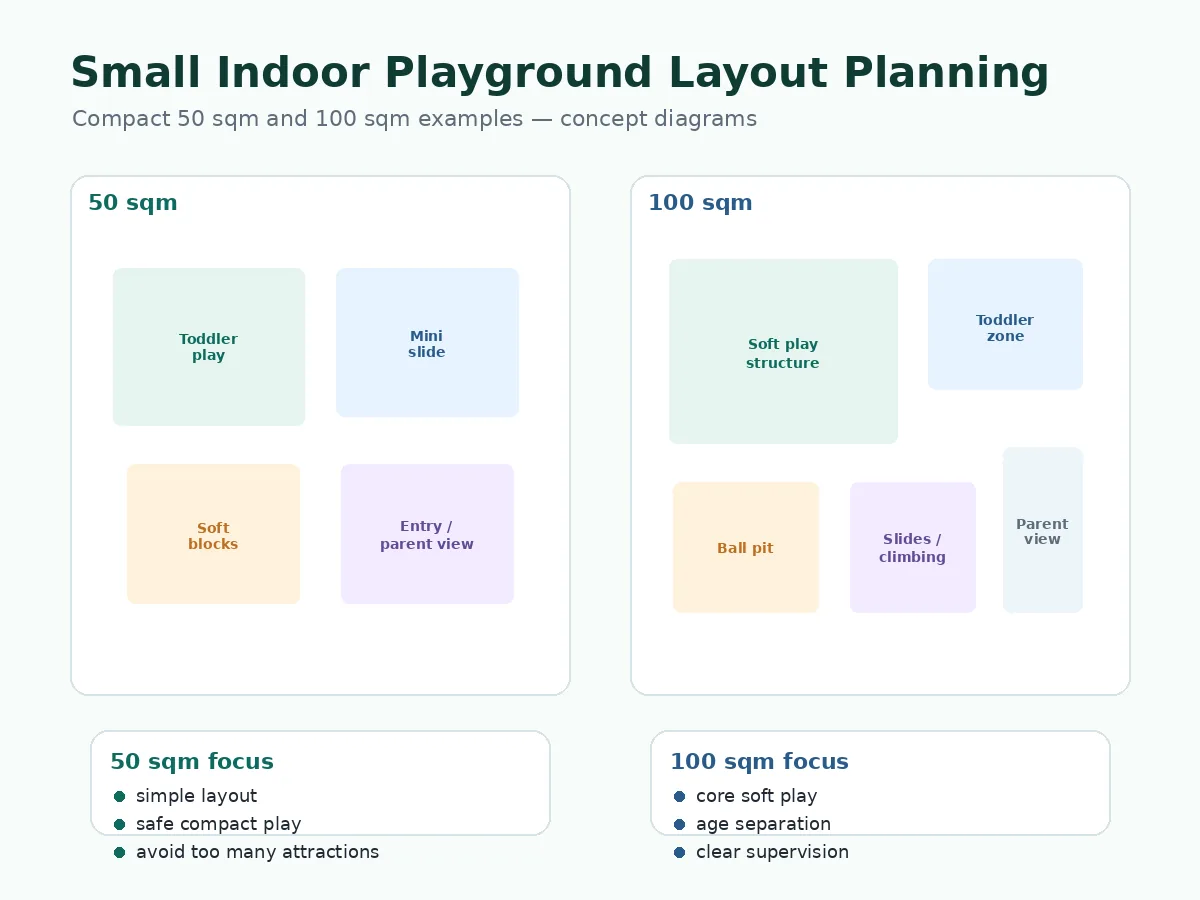
Un concetto pratico può utilizzare giochi per bambini a bassa altezza, un mini scivolo, gradini da arrampicata morbidi, ostacoli in schiuma e una piccola area con palline dove la circolazione lo consente. Il design dovrebbe dare priorità alla visibilità e all'accesso per la pulizia piuttosto che cercare di massimizzare il numero di componenti.
Principali fattori di costo per 50 mq
I principali fattori di costo sono l'elenco esatto delle attrezzature, il design personalizzato rispetto a quello modulare, le restrizioni di pareti o colonne, il rivestimento e la pavimentazione richiesti, la complessità del tema, l'imballaggio per l'esportazione e i minimi di trasporto. Un ambito di attrezzature ridotto non significa sempre un costo logistico proporzionalmente ridotto.
Punto decisionale dell'acquirente
Un errore comune nella pianificazione di un bar è quello di posizionare le attrezzature contro ogni parete disponibile e non lasciare una chiara linea visiva per i genitori o un percorso di pulizia. L'approccio migliore è selezionare una fascia d'età, definire la posizione di supervisione e proteggere un percorso semplice dall'ingresso a ciascun elemento di gioco.
Pianificazione dei costi per parco giochi indoor da 100 mq
Un parco giochi indoor di 100 mq - circa 1.076 piedi quadrati - può supportare un concetto soft-play più completo, ma richiede comunque una zonizzazione disciplinata. Può essere adatto per una piccola attività commerciale, un asilo nido, una scuola dell'infanzia, un angolo di un centro commerciale o un'area familiare di un ristorante.
Tipi di locali idonei per 100 mq
- Aree gioco per asili nido e scuole dell'infanzia
- Piccole zone gioco per centri commerciali
- Parchi giochi compatti a pagamento
- Centri di attività per bambini
- Zone familiari per ristoranti
- Sale per bambini comunitarie
Direzione attrezzature consigliata per 100 mq
Un concetto tipico può includere una struttura soft-play a bassa o media altezza, separazione per bambini piccoli, piccoli scivoli, una piscina di palline, pannelli da arrampicata, ostacoli morbidi e una limitata area di osservazione per i genitori. Il mix di attrezzature dovrebbe seguire un chiaro gruppo di età primario.
Principali fattori di costo per 100 mq
Il numero di livelli, il tipo di scivolo, la separazione per bambini piccoli, l'altezza libera, la densità di gioco, il lavoro tematico, la pavimentazione e l'ambito dei materiali possono tutti modificare il preventivo. Due planimetrie da 100 mq non dovrebbero essere confrontate a meno che entrambe non utilizzino lo stesso perimetro utilizzabile e componenti di gioco ampiamente simili.
Punto decisionale dell'acquirente
Un errore tipico in fase di ricezione inizia già in fase di progettazione: l'acquirente richiede una struttura a due livelli più densa ma non conferma se porte, scale o ascensori possano accettare i componenti imballati. Prima di approvare il layout, condividi il percorso di consegna e le limitazioni di accesso con il fornitore.
Pianificazione dei costi per parchi giochi indoor da 300 mq
Un parco giochi indoor di 300 mq (circa 3.229 piedi quadrati) è solitamente un progetto commerciale sostanziale. Può supportare una zonizzazione per età più chiara, una struttura principale soft-play, un'area gioco per bambini piccoli, scivoli, piscine di palline, elementi a tema e attrazioni aggiuntive selezionate.
Tipi di locali adatti per 300 mq
- Parchi giochi nei centri commerciali
- Piccoli centri di intrattenimento familiare
- Centri di intrattenimento comunitari
- Centri di gioco indoor indipendenti
- Centri per bambini in stile franchising
- Centri attività più grandi
Direzione attrezzature consigliata per 300 mq
Un ambito pratico può includere una struttura principale a più livelli, una zona per bambini piccoli, scivoli, piscina di palline, percorsi di arrampicata, pannelli a tema e una o due categorie di attrazioni opzionali. Reception, area di attesa per genitori, magazzino, uso per feste e circolazione dovrebbero essere preventivati separatamente dall'impronta dell'attrezzatura.
Principali fattori di costo per 300 mq
La densità delle attrezzature, la complessità del tema, le attrazioni opzionali, il volume di esportazione, la preparazione del sito e il supporto all'installazione hanno una maggiore influenza in questa fase. L'aggiunta di elementi trampolino o ninja cambia anche le discussioni applicabili su progettazione, funzionamento e sicurezza; non dovrebbero essere trattati come semplici accessori del soft play.
Punto decisionale dell'acquirente
Un problema comune di preventivazione si verifica quando un fornitore include il trampolino o la zona sfide mentre un altro lo prezza come opzione. I totali non possono essere confrontati direttamente. Separare il preventivo in soft play principale, attrazioni opzionali, progettazione, imballaggio, trasporto, supporto all'installazione e lavori a carico del proprietario.
Pianificazione dei costi per un parco giochi indoor di 500 mq
Un parco giochi indoor di 500 mq (circa 5.382 piedi quadrati) può supportare un parco giochi commerciale più grande o un concetto in stile FEC, ma non ogni metro quadrato dovrebbe essere riempito con attrezzature da gioco. Il piano potrebbe necessitare di reception, deposito scarpe, circolazione, posti a sedere per genitori, funzioni per feste, spazio per il personale e accesso per la manutenzione.
Tipi di locali adatti per 500 mq
- Grandi parchi giochi indoor
- Centri di intrattenimento familiare
- Attrazioni principali per centri commerciali
- Centri di attività indoor
- Spazi di intrattenimento per tutte le età
- Centri gioco per bambini più grandi
Direzione attrezzature consigliata per 500 mq
Un concetto può combinare una struttura principale soft-play, una zona per bambini piccoli, scivoli più grandi, piscina di palline, zone trampolino o ninja selezionate, giochi interattivi, spazio per feste, posti a sedere per genitori e reception. Il mix finale dipende dall'altezza del soffitto, dal modello di personale, dagli utenti target e dai requisiti locali.
Principali fattori di costo per 500 mq
Interfacce di zona, separazione per età, altezza della struttura, lavori a tema personalizzati, volume di imballaggio per l'esportazione, coordinamento dell'installazione e allestimento a carico del proprietario diventano più importanti. L'acquirente dovrebbe anche confermare l'accesso per lo scarico, le dimensioni di porte e ascensori, lo stoccaggio temporaneo e la sequenza di installazione prima della spedizione.
Punto decisionale dell'acquirente
Durante la pianificazione dell'installazione, un progetto più grande può subire ritardi evitabili se pavimentazione, lavori elettrici, lavori sul sito relativi al fuoco o percorsi di accesso non sono completati all'arrivo delle attrezzature. Una matrice di responsabilità dovrebbe identificare l'ambito del fornitore, l'ambito dell'appaltatore locale e l'ambito dell'acquirente prima della data di spedizione.
Mix di attrezzature per dimensione
La tabella sottostante è una guida alla selezione, non un'approvazione ingegneristica. L'adattamento finale dipende dalla planimetria esatta, dall'altezza libera, dal gruppo di età, dal modello di supervisione, dalle specifiche delle attrezzature e dalla revisione locale.
| Tipo di attrezzatura | 50 mq | 100 mq | 300 mq | 500 mq |
|---|---|---|---|---|
| Area gioco per bambini piccoli | Focus principale | Area principale o separata | Zona separata | Zona separata |
| Struttura soft-play | Compatto e a bassa altezza | Attrezzatura principale | Zona principale multilivello | Zona principale multilivello |
| Piscina di palline | Piccolo se la circolazione lo consente | Comune | Comune | Comune o integrato con aree gioco più grandi |
| Scivoli più grandi | Generalmente vincolato | Possibile dopo revisione altezza | Ottima scelta | Ottima scelta |
| Zona trampolini | Usually unsuitable | Generally limited | Optional separate attraction | Possible dedicated zone |
| Percorso ninja | Usually unsuitable | Generally limited | Optional separate attraction | Possible dedicated zone |
| Giochi interattivi | Selective wall or floor games | Opzionale | Useful add-on | Useful add-on or separate zone |
| Party function | Normally outside play scope | Limitato | Opzionale | Often commercially relevant |
| Posti a sedere per i genitori | Compact and sightline-led | Piccola area | Consigliato | Important operating function |
| Reception / biglietteria | Usually part of the host venue | Opzionale | Commercially relevant | Consigliato |
Start with Playtime’s attrezzature per parchi giochi indoor commerciali range when defining the core structure.
For compact and mid-size venues, soft-play equipment is usually the primary category.
For larger active zones, review attrezzature per parchi trampolini e ninja course equipment only after the floor plan, clear height, operating model and local requirements are defined.
Fattori di costo che cambiano all'aumentare delle dimensioni
Usable Area Becomes More Important
Reception, seating, party rooms, circulation and staff space consume a larger share of the commercial plan. Quote the marked equipment boundary, not only the lease area.
Structure and Materials Increase
Larger or taller play zones generally require more frame, platforms, padding, netting, slides, decorative panels and connection components.
Zoning Requires More Design Work
Age groups, energy levels, parent sightlines, staff routes, entrances, exits and maintenance access must work together rather than being planned as isolated attractions.
Packaging and Freight Become Less Predictable
Large slides, irregular theme pieces and padded components can increase packing volume even when the floor area changes only moderately.
Installation Access Becomes a Project Input
Unloading space, door widths, elevators, stairs, temporary storage, local tools and site readiness can change installation responsibility and cost.
Local Review May Affect the Scope
Public or commercial venues may require fire, building, accessibility, insurance, landlord or inspection review according to the destination and project type.
Quali informazioni dovrebbero inviare gli acquirenti per un preventivo basato sulle dimensioni?
A size-based quotation becomes useful only when every supplier receives the same project inputs. Prepare the information below before asking for final pricing.
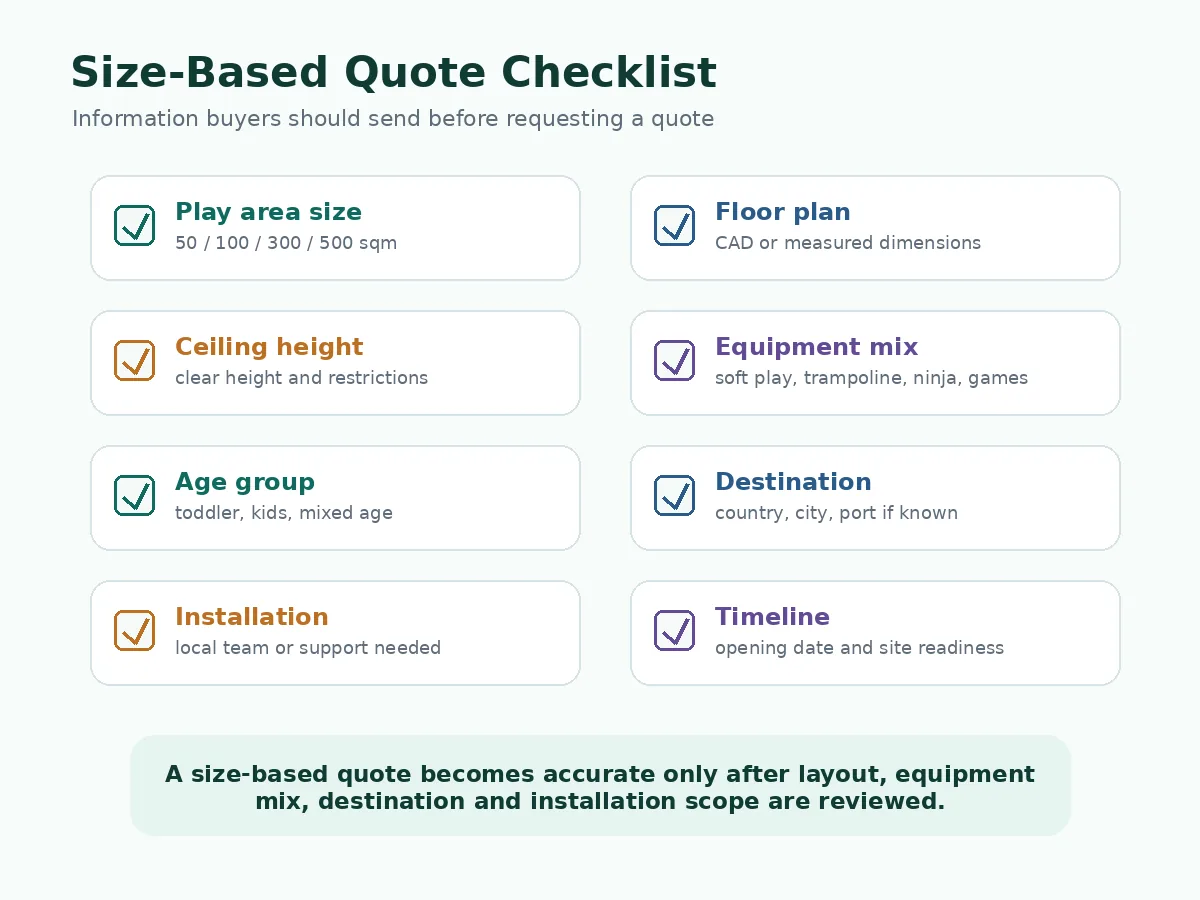
Size-Based Indoor Playground RFQ Checklist
- Total venue area and marked usable equipment area
- Dimensioned floor plan or CAD file
- Finished-floor-to-obstruction clear height, including beams and ducts
- Columns, walls, windows and restricted zones
- Entrances, exits, emergency routes and door swings
- Reception, seating, party, storage and staff areas
- Target age group and required age separation
- Expected operating flow and supervision position
- Core equipment zones and optional attractions
- Venue type and business model
- Destination country, city, port or delivery address as applicable
- Freight basis and installation preference
- Door, elevator, stair, unloading and temporary-storage constraints
- Opening timeline and current site-readiness status
- Local safety, building, fire, accessibility or landlord requirements if known
- Foto o video del sito
- Theme direction and budget layer being requested
For a dedicated document and input checklist, use Playtime’s lista di controllo RFQ per attrezzature per parchi giochi indoor. A preliminary layout is a planning document; it does not replace local approval drawings or site verification.
How to Compare Size-Based Quote Scope
A lower 300 sqm or 500 sqm quotation may simply include fewer attractions, less design work, a different freight basis or less installation support. Compare the scope line by line before comparing the total.
| Voce del preventivo | Cosa confermare | Perché è importante |
|---|---|---|
| Area basis | Total venue area versus marked usable equipment area | Suppliers may otherwise quote different footprints for the same venue. |
| Equipment and zone list | Slides, ball pits, toddler zone, soft play, trampoline, ninja, games, party and service functions | Same-area projects can contain materially different attraction scope. |
| Ambito della progettazione | Floor-plan review, 2D layout, 3D concept, theme work, revisions and final production drawings | Design effort increases when zoning and customization become more complex. |
| Material and component scope | Frame, platforms, padding, covers, nets, slides, hardware, flooring and project-specific options | Vague material descriptions make long-term value difficult to compare. |
| Packing and freight basis | Export packing, estimated volume, shipment term, destination port, inland delivery and unloading | Equipment-only price is not the same as landed cost. |
| Installation responsibility | Drawings, manuals, remote support, on-site support, local labor, tools, travel and accommodation | Installation support can represent very different supplier and buyer responsibilities. |
| Owner-side works | Flooring, electrical work, fire-related changes, HVAC coordination, approvals, insurance and fit-out | These items can sit outside the equipment quote but still affect the opening budget. |
| Commercial terms and documents | Lead-time basis, payment terms, warranty terms, spare parts and available project documents | The final number is not fully comparable without delivery and support conditions. |
Domande che gli acquirenti dovrebbero porre ai fornitori prima di confrontare i preventivi
These questions reveal whether a quotation is based on the actual venue and operating scope or only on a general size category.
Domande per la valutazione del fornitore
- Is the quotation based on total venue area or a marked usable equipment boundary?
- Which play zones and components are included, optional and excluded?
- Which age group and supervision model informed the layout?
- Does the design scope include floor-plan review, 2D layout, 3D concept and revisions?
- Which material and component details will be confirmed in the final scope?
- What packing volume and freight assumptions are used?
- Which shipment term, destination and unloading responsibilities apply?
- What installation drawings, manuals, remote support or on-site support are included?
- What must the buyer and local contractor prepare before delivery?
- Which safety, building, fire, accessibility, landlord or inspection requirements remain the buyer’s local responsibility?
- Which warranty, lead-time, spare-part and after-sales terms will be written into the order documents?
- What information is still missing before the quote can be treated as final?
Do not rely on statements such as “commercial grade,” “meets all standards” or “installation included” unless the supplier defines exactly what those claims mean for the quoted project.
Come controllare i costi per ogni dimensione
Good cost control removes low-priority complexity without weakening necessary padding, barriers, structural scope, access, inspection information or local compliance work.
Per 50 mq
Focus on one primary age group, one clear play experience and direct supervision. Use compact modular elements where appropriate and avoid theme features that consume the limited usable area.
Per 100 mq
Prioritize the core soft-play structure, toddler separation and circulation. Keep custom theme work concentrated at the entrance or other high-visibility points instead of customizing every component.
Per 300 mq
Separate must-have attractions from optional or phase-two additions. Request a base quote for the core soft-play and age-zone scope, then price trampoline, ninja, interactive or party functions separately.
Per 500 mq
Budget by zone and responsibility. Core equipment, optional attractions, service areas, owner-side fit-out, freight and installation support should each be visible so the project can be phased without redesigning the entire venue.
Come Playtime supporta la pianificazione di parchi giochi indoor basata sulle dimensioni
Playtime Playground uses project inputs rather than a universal price list to discuss commercial indoor playground scope. Buyers can submit the actual venue information so layout, equipment categories, quote boundaries, packing and installation-support options can be reviewed together.
Share the dimensioned floor plan and mark reception, seating, service and restricted zones.
Confirm clear height, columns, entrances, exits, delivery access, age groups and supervision.
Separate core soft play from optional attractions, theme work and owner-side functions.
Confirm equipment, documents, packing, freight assumptions, installation support and exclusions.
Early-stage buyers can use Playtime’s strumenti di pianificazione per parchi giochi to organize venue inputs.
Gli acquirenti possono esaminare playground project examples for general project context and servizi per progetti di parchi gioco for available support directions. Project photos and service descriptions should not be treated as proof that the same scope, materials or approval conditions apply to every order.
Final equipment details, documents, packing scope, shipping basis, warranty terms, lead-time basis and installation responsibilities should be confirmed in the project quotation and order documents.
Note su sicurezza, materiali e conformità
Area size can change the number of play zones and the complexity of supervision, circulation and installation, but it does not determine which safety framework applies. Soft-contained play equipment and institutional trampoline courts, for example, are addressed by different ASTM documents. Local laws, codes, insurance requirements and venue approvals may add further obligations.
Buyers should ask which material, layout, installation and safety-related documents are available for the final quoted scope. Supplier documents can support local review, but they do not replace the responsibilities of the owner, architect, engineer, landlord, insurer, inspector or authority having jurisdiction.
Riferimenti esterni utili
- ASTM F1918-21 for soft contained play equipment — safety-performance context for equipment within that standard’s scope.
- ASTM F2970-25 for trampoline courts — separate design, manufacture, installation, operation, maintenance and inspection context for institutional trampoline courts.
- Manuale di sicurezza per parchi giochi pubblici CPSC — current U.S. public-playground guidance; it is guidance rather than a universal project approval.
- U.S. Access Board play-area guide — accessibility guidance for play components and accessible routes in covered U.S. projects.
Final Thoughts: Start With Size, Then Quote the Actual Scope
Fifty, 100, 300 and 500 square meters describe different planning stages, but they do not produce automatic prices. The meaningful quotation basis is the usable equipment area combined with the confirmed age zones, equipment list, design scope, materials, packing, freight basis, installation responsibility and owner-side work.
Send the dimensioned floor plan, clear height, usable play boundary, target users, preferred zones, destination and installation preference. Then ask each supplier to quote the same scope and identify every inclusion, option and exclusion.
Request a Size-Based Indoor Playground Quote
Planning a 50 sqm, 100 sqm, 300 sqm or 500 sqm indoor playground? Send the dimensioned floor plan, marked usable equipment area, clear ceiling height, target age group, preferred play zones, destination, delivery access and installation preference. Playtime can review the project inputs and discuss a quotation based on the actual scope rather than floor area alone.
Send Project Details for ReviewFAQ
Quanto costa un parco giochi indoor di 50 mq?
Un prezzo affidabile per 50 mq non può essere calcolato solo dalla superficie. Questa dimensione, circa 538 piedi quadrati, supporta solitamente un concetto compatto di soft play o per bambini piccoli. Il preventivo dipende ancora dall'elenco esatto delle attrezzature, dall'impronta utilizzabile, dal livello di progettazione, dall'imballaggio, dalla destinazione, dalla base di trasporto e dalla responsabilità dell'installazione.
Quanto costa un parco giochi indoor di 100 mq?
Una struttura di circa 100 mq (circa 1.076 piedi quadrati) può ospitare una piccola area soft play commerciale, una zona separata per bambini piccoli, una piscina di palline e scivoli compatti, se la planimetria e l'altezza libera lo consentono. Confronta i preventivi solo dopo aver verificato che il perimetro utilizzabile delle attrezzature e i componenti inclusi siano gli stessi.
Quanto costa un parco giochi indoor di 300 mq?
Un progetto di 300 mq, circa 3.229 piedi quadrati, può variare da un parco giochi per centri commerciali incentrato sul soft play a una struttura con attrazioni miste. Il soft play di base, zone opzionali per trampolini o percorsi ninja, lavori a tema, trasporto e supporto all'installazione devono essere prezzati separatamente in modo che i fornitori possano essere confrontati per ambito.
Quanto costa un parco giochi indoor di 500 mq?
Un progetto di 500 mq, circa 5.382 piedi quadrati, richiede normalmente un budget zona per zona. Attrezzature, reception, posti a sedere, funzioni per feste, circolazione, trasporto, installazione e allestimento lato proprietario non dovrebbero essere combinati in un'unica cifra non spiegata per metro quadrato.
Il costo di un parco giochi indoor è calcolato al metro quadro?
Il metro quadro può essere un riferimento per la pianificazione iniziale, ma non è un metodo di prezzo finale affidabile. L'area utilizzabile per le attrezzature, l'altezza della struttura, il mix di attrazioni, i materiali, il volume di imballaggio, i termini di consegna, il supporto all'installazione e i requisiti specifici del progetto locale possono tutti modificare il totale.
L'area totale del locale è la stessa dell'area utilizzabile per le attrezzature da gioco?
La reception, le aree salotto, le sale feste, lo spazio di stoccaggio, lo spazio per il personale, le aree di circolazione, le colonne, le uscite e altre aree ristrette possono ridurre l'area occupata dalle attrezzature. Segnare il perimetro di gioco utilizzabile sulla planimetria prima di richiedere preventivi comparabili.
Quale dimensione è adatta per un centro di intrattenimento familiare?
Un FEC multi-zona spesso necessita di più spazio rispetto a una piccola area soft-play poiché può includere reception, sale per feste, aree di sosta per genitori, percorsi per il personale e zone di attrazione separate. Cinquecento metri quadrati possono supportare un concetto in stile FEC in alcuni progetti, ma l'idoneità finale dipende dal modello di business, dalla planimetria, dall'altezza libera e dai requisiti locali.
Cosa devo inviare per un preventivo di parco giochi indoor basato sulle dimensioni?
Invia l'area totale del locale, l'area attrezzature utilizzabile indicata, la planimetria quotata, l'altezza libera del soffitto, colonne, ingressi, uscite, fasce d'età, zone di gioco preferite, destinazione, condizioni di accesso per la consegna, base di trasporto, preferenza di installazione, tempistiche di apertura e requisiti locali noti.